Expertise
3 min reading
17 February 2023
17 February 2023
LoRaWAN® Asset Tracking: How It Works, What It Costs, and Where It Beats Cellular


LoRaWAN® asset tracking uses long-range, low-power radio to report where your assets are and what condition they're in. Trackers run for years on a single battery, connect through gateways you own, and need no SIM cards or monthly data plans in private LoRaWAN deployments. For most companies, that makes it the lowest-cost way to track pallets, equipment, containers, vehicles and people, indoors and out.
This guide explains how LoRaWAN asset tracking works, what customers actually need from a tracking system, how LoRaWAN compares with cellular, GPS and RFID, what it costs, and which industries use it today.

What Is LoRaWAN Asset Tracking?
Asset tracking is the ability to see the location, status and condition of physical assets: equipment, tools, materials, shipments, vehicles and even staff. Businesses use it to keep inventory accurate, cut losses and theft, meet safety and compliance rules, and spend less time searching for things.
LoRaWAN asset tracking does this over LoRaWAN, a low-power wide-area network (LPWAN) protocol built for small, infrequent messages sent over long distances. Instead of streaming a GPS position every few seconds over a cellular network, a LoRaWAN tracker sends short updates when something meaningful happens. The asset starts moving, arrives at a site, or its temperature drifts out of range.
That design is what gives LoRaWAN trackers their multi-year battery life and very low running cost.
How Does LoRaWAN Asset Tracking Work?
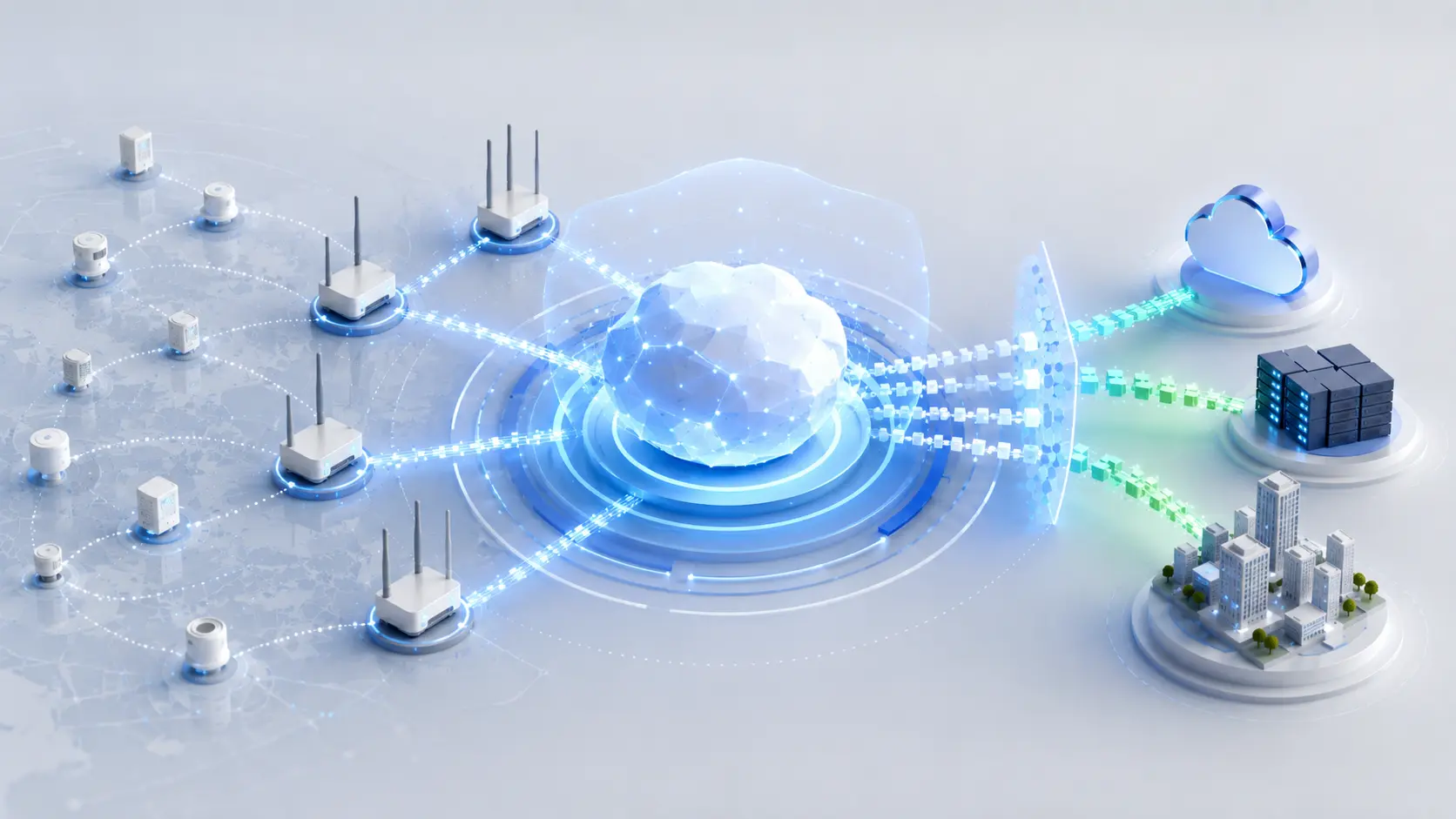
Every LoRaWAN tracking system has the same four layers:
- Tracker. A battery-powered device on the asset records its position and sensor data (motion, temperature, shock, vibration) and sends it as a short radio message.
- Gateway. A LoRaWAN gateway picks up messages from every tracker in range and forwards them over Ethernet, Wi-Fi or cellular backhaul.
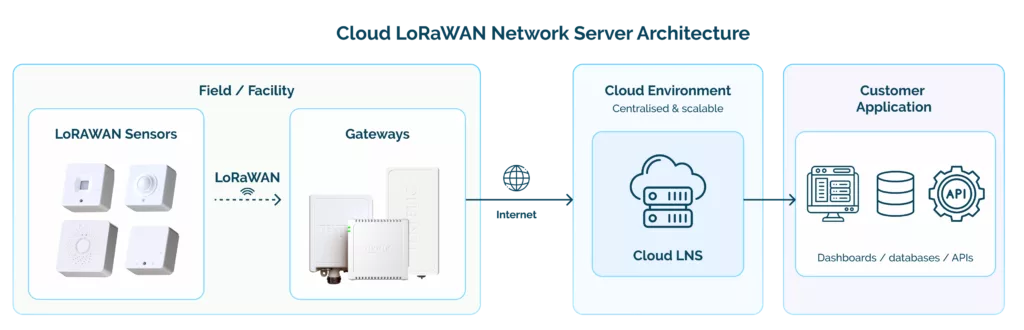
- Network server. The network server authenticates devices, removes duplicate messages, and routes data to the right application. All traffic is encrypted end to end with AES-128.
- Application. A dashboard such as TEKTELIC LOCUS shows assets on a map or floor plan, sends alerts, and passes data to other systems through an API.

Reporting modes
You choose how often trackers report, from near real-time (every 1–2 minutes) to hourly, daily or less. Event-based tracking, built into TEKTELIC trackers, raises the reporting rate only while an asset is moving and drops it when the asset is still. You get the updates that matter without wasting battery on an asset sitting on a shelf.
How LoRaWAN trackers find location
- GNSS (GPS). Precise outdoor positioning for yards, construction sites, fleets and anything in the open.
- BLE. Trackers scan nearby Bluetooth® Low Energy beacons, or act as beacons themselves, for room- or zone-level accuracy indoors.
- Wi-Fi. Nearby access points give an indoor or urban position without powering a GPS receiver.
- Network-based geolocation. The network estimates a device's position from the gateways that hear it. No GPS hardware is needed, which suits low-cost tags where a rough location is enough.
Most real deployments combine these. A tracker might use BLE inside a warehouse and switch to GPS once it leaves the building.
What Customers Really Need From Asset Tracking
The common assumption is that tracking needs nationwide cellular coverage and constant GPS updates. In practice, most companies don't need to know every turn a pallet or container takes. They need answers to three questions:
- When did it leave? The warehouse, plant or distribution center.
- When did it arrive, and was that on time?
- What happened on the way? Did temperature, humidity, shock or vibration stay within limits?
With those answers, a business can predict delivery times, confirm quality, and decide quickly whether goods are accepted, inspected or rejected. Couriers work the same way: customers care about departure, arrival and condition, not every intersection the truck passed.
A food distributor doesn't need to know a refrigerated truck was at one intersection at 10:34 and another at 10:36. It needs to know the truck left on time, the trailer stayed cold, and the load arrived on schedule.
Coverage where it matters beats coverage everywhere.

LoRaWAN vs Cellular, GPS and RFID for Asset Tracking
However, these technologies play different roles. GNSS (GPS) determines where an asset is, while LoRaWAN and cellular provide the connectivity that carries that location and sensor data back to you. BLE, Wi-Fi and RFID add short-range positioning, mostly indoors. That's why tracking solutions often combine them: a LoRaWAN tracker may use GPS outdoors and BLE inside, and a cellular tracker typically pairs GPS with LTE-M or NB-IoT.
The table below compares the approaches companies usually weigh when choosing a tracking system, based on how each one locates assets and gets data back
These technologies play different roles. GNSS/GPS determines location, while LoRaWAN and cellular provide connectivity. Tracking solutions often combine them.
|
|
LoRaWAN | Cellular (LTE-M / NB-IoT) | Standalone GPS | Barcode / RFID |
|
Coverage model |
Your own gateways at the sites that matter, or a public network | Carrier network, wide area | Satellites, outdoors only |
Fixed readers or handheld scanners |
| Indoor performance |
Strong: sub-GHz signals penetrate buildings, trailers and basements |
Weak inside metal trailers, reinforced warehouses and underground | Poor: needs line of sight to the sky |
Good, but only at read points |
| Battery life |
Multiple years, depending on reporting rate |
Shorter, especially where coverage is weak and devices retransmit | Short when reporting often |
Passive tags need no battery |
| Recurring cost |
None per device once gateways are installed |
SIM and monthly plan per device | Usually paired with cellular, so the same plan |
Low, but labor-heavy |
| Condition data |
Yes: temperature, shock, vibration and more |
Yes | Location only |
No |
|
Automation |
Fully automatic |
Fully automatic |
Fully automatic |
Needs manual scans; easy to skip |
What Determines the Cost of a LoRaWAN Asset Tracking Solution?
The two costs that stop cellular tracking from scaling are batteries and connectivity. LoRaWAN removes most of both.
- Infrastructure. One indoor KONA Micro gateway or one outdoor KONA Enterprise gateway is typically enough to cover a site.
- Connectivity. No SIM cards, roaming charges or per-device subscriptions. Once gateways are in place, sending data costs essentially nothing, whether you track 50 assets or 50,000.
- Batteries. Trackers last multiple years on one battery, depending on how often they report. Cellular devices use far more energy, especially where coverage is weak, so batteries are swapped more often.
- Reuse. Rugged trackers survive repeated trips and can move from shipment to shipment.

Add those up over the life of a deployment and LoRaWAN delivers a lower total cost of ownership (TCO) than cellular for most tracking projects.
Example: tracking fresh produce for less
A distributor ships fresh produce from a regional warehouse to several supermarkets.
- At the warehouse, loads go into refrigerated trucks fitted with LoRaWAN sensors such as TEKTELIC TUNDRA, rated from –40°C to +65°C.
- On the road, the sensors log temperature and vibration.
- When the truck reaches a supermarket, a gateway at the dock automatically collects the stored data.
The distributor knows the load left on time, stayed in the cold chain, and arrived as expected. No SIM cards, no roaming fees, no battery swaps every few weeks. For a mid-sized logistics company running between a handful of warehouses and stores, the model scales one site at a time.
LoRaWAN GPS Trackers and Indoor Trackers from TEKTELIC
The right tracker depends on where your assets spend their time. TEKTELIC offers devices for indoor, outdoor, hazardous and cold-chain environments, all built to run on any standard LoRaWAN network.
| Tracker |
Best for |
Location technology |
Key features |
| ORCA |
Outdoor equipment, yards, construction |
LoRaWAN + GPS, optional BLE |
Rugged IP67 housing, event-based start-up |
| PELICAN |
Logistics, manufacturing, construction |
LoRaWAN + BLE |
IP67 for harsh outdoor sites |
| PELICAN EX |
Oil & gas, rail yards, chemical plants |
LoRaWAN + BLE |
ATEX Zone 1/21 certified for vapors, dust and combustible gases; works in heat up to 50°C |
| SPARROW |
Offices, hospitals, retail, factories |
LoRaWAN + BLE (tracker or beacon mode) |
Up to 5-year battery in tracker mode, accelerometer, reports more often when moving |
| TUNDRA |
Cold chain and sensitive shipments |
LoRaWAN, logs data in transit |
Records temperature, –40°C to +70°C; reusable |
Need a LoRaWAN GPS tracker?
Choose a GPS-enabled tracker like ORCA when assets live outdoors and you need precise coordinates: heavy equipment, trailers, containers in a yard, or tools on a job site. For assets that stay indoors, a BLE-based tracker like SPARROW gives better accuracy and much longer battery life, because GPS can't see the sky through a roof.
All TEKTELIC trackers plug into LOCUS, TEKTELIC's real-time location application, or into your own platform through an open API. Not sure which device fits? Try the Product Selector.
LoRaWAN Asset Tracking Use Cases by Industry
Logistics and supply chain
LoRaWAN tracks shipments, containers, trailers and returnable assets between sites. Two views matter in container tracking. Intra-container tracking follows individual items or pallets inside a shipment. Inter-container tracking follows the shipment as a whole. Gateways at origin and destination confirm departure and arrival, while sensors like TUNDRA record conditions on the way.
TEKTELIC KONA gateways also support Europe's largest railway operator, which uses them to remotely monitor conditions inside trains and the temperature of the batteries that power them. Read the railway project story.
Oil and gas
Oil and gas sites manage thousands of assets across large, hazardous areas where running new infrastructure is expensive. LoRaWAN covers wide sites from a few gateways. ATEX Zone 1/21-certified trackers like PELICAN EX are designed for asset tracking in hazardous environments where flammable gases, vapours or combustible dust may be present.
Healthcare
Hospitals lose staff time searching for IV pumps, wheelchairs, carts and other mobile equipment. LoRaWAN trackers with BLE positioning show where each item is in real time, support automated inventory, and work in RF-dense buildings full of concrete and metal. Learn more about asset tracking in hospitals.
Manufacturing and retail
Factories track machinery, tools, work-in-progress and forklifts to find bottlenecks, improve quality control and reduce downtime. Motion and vibration data can also flag equipment that needs service before it fails. In retail and warehousing, trackers on pallets, trolleys and forks make stock easy to find. See our guide to choosing an equipment tracking solution.

Private or Public LoRaWAN Network?
LoRaWAN gives you two ways to connect trackers, and you can mix them.
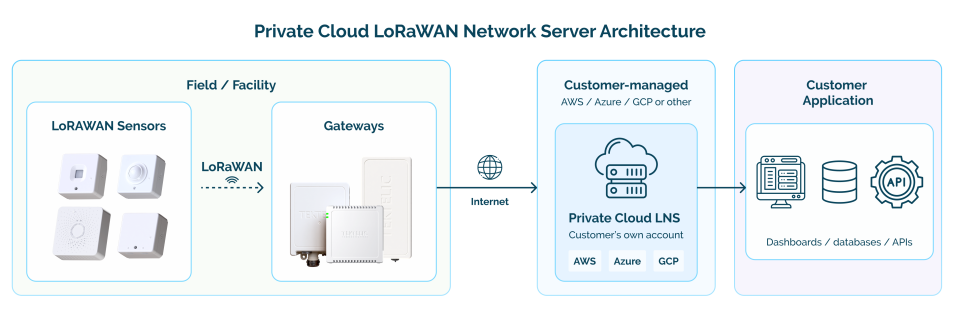
- Private network. You install your own gateways at the sites you care about and run your own network server, in the cloud, on your premises, or embedded in the gateway. You control coverage, data and cost. This is the most common model for warehouses, plants, campuses and hospitals. Compare the options in Cloud, On-Premises, and Embedded LoRaWAN® Network Servers.
- Public network. Operators and community networks offer LoRaWAN coverage in many cities and regions, often with network-based geolocation as an add-on. This suits assets that move between sites you don't own.
Because LoRaWAN is an open standard, the same tracker can work on either. Start private at your main sites and add public coverage later if your assets travel further.
The Bottom Line
LoRaWAN doesn't try to cover every road in real time, and most asset tracking doesn't need it to. What businesses need is reliable checkpoints, condition data, and a system that stays affordable as it grows. With multi-year battery life, strong indoor coverage, hybrid GPS and BLE positioning, and no per-device fees, LoRaWAN delivers exactly that at the lowest total cost.