
Expertise
6 min reading
21 January 2026
21 January 2026
Improving Workplace Safety in Industrial Sites Starts With Better Visibility

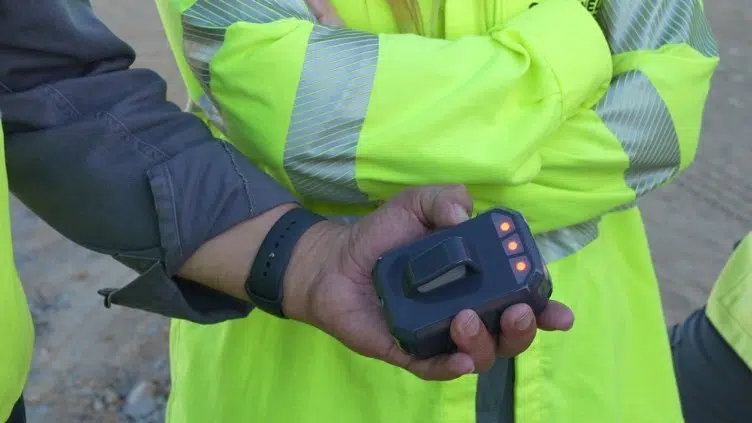
What happens if a worker falls and no one sees it? What if someone enters a restricted area and does not realize the risk? And how long does it really take to find the right person during an emergency?
These questions come up often in industrial workplaces such as factories, utilities, ports, energy sites, and large facilities. People move constantly. They work indoors and outdoors. Some employees work alone, in quiet zones, or far from a supervisor.
This is why worker safety monitoring is becoming part of modern safety management. It does not replace safety protocols. It supports them with faster alerts, clearer location visibility, and better coordination.
Why workplace safety visibility is still a challenge for businesses
Industrial sites are busy, spread out, and always changing. Even strong safety protocols can leave gaps when teams do not have real-time visibility.
A common issue is delayed response. A fall, injury, or sudden medical event may happen out of sight. If the worker cannot call for help, minutes are lost.
Another challenge is lone worker tasks. Maintenance rounds, inspections, and security patrols are often done solo. A lone worker policy may require check-ins, but people can forget, or they may be unable to respond.
Restricted areas add more risk. Some zones require permits, training, or protective equipment. Without location awareness, it is hard to know when someone enters a zone unintentionally.
And finally, many sites have indoor and outdoor tracking gaps. GPS can work well outside, but incidents often happen indoors, where satellite signals are weaker.
These problems are not caused by poor planning. They reflect the limits of older tools.

What employers want from a safety monitoring system
When employers invest in safety, they are not looking for “more data.” They want clear protection and measurable results.
Most safety teams focus on outcomes like these:
- Faster response during emergencies
- Better support for remote workers and lone workers
- Fewer serious incidents and fewer near misses
- Clear incident investigation and reporting
- Stronger safety culture across the workforce
In short, the goal is to reduce uncertainty when something goes wrong, and to improve workplace safety in a way that can be proven.
Worker safety monitoring solution basics: how protection actually works
A modern safety monitoring system connects three things:
- a wearable device on the worker
- the location and event information it collects
- the people who need instant access to that information (a monitoring team)
This monitoring team might be an internal safety management group, a control room, or an approved service provider that supports emergency response workflows. What matters is that alerts go to the right people, quickly, and with enough detail to act.
Next, let’s translate key features into real-world benefits.

Benefits of lone worker safety monitoring for employees and customers
Better safety has a human impact first. Employees feel more protected. But it also matters to customers, contractors, and site visitors, because safer operations reduce downtime, disruption, and risk.
Below are the main capability areas that drive results.
1. Panic button protection and fall alerts for employee safety
In an emergency, a worker needs a simple way to ask for help. A wearable panic button (SOS) gives that option. It is faster than unlocking a smartphone, finding an app, or trying to explain the situation over a radio.
Fall detection adds another layer of protection. If a worker slips, falls, or becomes unable to respond, the system can still trigger an alert.
Why this matters in real life
- Emergencies are reported earlier
- Response teams waste less time guessing what happened
- Employees feel safer during lone worker tasks
- Employers get clearer proof of response times
This is one of the most direct workplace safety improvements a site can make.
2. GPS tracking and indoor visibility in a safety monitoring system
Alerts help, but responders also need location. This is where gps tracking supports faster action outdoors. For large sites, yards, ports, or remote utility areas, it reduces time spent searching.
Indoors, satellite signals can drop. That is why many worker safety monitoring solutions also support indoor location awareness using short-range signals in buildings and key zones. Instead of perfect coordinates, teams gain practical visibility: which area, which building, which zone.
Real benefits
- Faster response because the location is clearer
- Better support for remote workers who move around site
- Stronger incident timelines for safety management reviews
- Less confusion during night shifts or low-staff periods
These location records also support “time monitoring” in a useful way: events are time-stamped, so teams can measure how long it took to detect an issue, acknowledge it, and arrive.
3. Lone worker safety monitoring and a stronger lone worker policy
A lone worker policy often requires check-ins, buddy systems, or scheduled calls. Those steps are important, but they are hard to enforce perfectly.
Lone worker safety monitoring supports the policy with real-time awareness. Instead of relying only on manual check-ins, teams can respond to alerts and confirm last known location patterns when needed.
This does not remove responsibility from the worker. It supports them when they are under stress, hurt, or unable to communicate.
What changes
- Less “guesswork” when a check-in is missed
- Faster escalation because alerts are automatic
- Clearer visibility for supervisors without constant radio calls
4. Geofencing protection for employees in restricted workplace zones
Many incidents start with a simple mistake: entering the wrong area, taking a shortcut, or staying too long in a risky zone.
Geofencing helps by defining boundaries around restricted zones. If someone enters a boundary, the event can trigger an alert or be logged for review.
This supports safety protocols in a practical way. It is not about policing. It is about reducing accidental risk and learning where workflows need improvement.
Benefits for safety culture
- Fewer repeated rule violations
- Better training, because patterns are visible
- Stronger compliance evidence during audits
- Clearer accountability without blame
5. Monitoring team instant access through a mobile app and smartphone alerts
In many sites, the people who need to respond are not sitting at a desk. They are moving across the workplace.
That is why modern systems often share alerts through a mobile app that can be used on a smartphone by supervisors, security, or the on-call response lead. This supports instant access to critical information, even when teams are distributed.
Why it matters
- Alerts reach the right people faster
- Response does not depend on being in one control room
- Escalation is easier during nights and weekends
- The monitoring team can coordinate action in real time
This is often the difference between “we saw the alert later” and “we started responding immediately.”
6. Daily use: safety items that support adoption and long-term service reliability
In industrial sites, adoption matters. A system can be technically strong, but if workers do not use it, the safety benefit disappears.
Practical details help adoption:
- clear feedback (sound or lights) so workers know an alert was triggered
- rugged design for harsh environments
- long battery life to reduce maintenance
- simple routines for device checks
Think of these as small safety items that make the program reliable day after day. They reduce downtime, reduce missed coverage, and improve trust.
From an employer view, reliability also reduces the support burden. Whether the site manages it internally or uses a service partner, fewer device issues means fewer gaps in protection.

Hazardous areas: when employee safety requires certified protection
Some sites include zones where explosive gases, vapors, or dust may be present. In these areas, the rules are stricter, and standard electronics may not be allowed.
A certified wearable makes it possible to extend worker safety monitoring into hazardous zones while staying aligned with site safety protocols and compliance requirements.
This matters because hazards do not stop at a doorway. The same worker may move between normal and hazardous zones in a single shift. Consistent protection reduces risk during those transitions.
Safety management results: turning monitoring into measurable benefits
To make a safety monitoring system successful, teams need clear workflows, not just alerts.
High-performing sites usually do three things:
- Define response steps
Who receives the alert? Who responds first? When do you escalate?
- Track a few simple metrics
- time from alert to acknowledgement
- time from acknowledgement to arrival
- number of alerts verified as real incidents
- repeated zone-entry patterns
- lone worker periods with no check-in
- Use trends for prevention
If falls happen near the same area, improve lighting, stairs, floor grip, signage, or training.
Within 30–90 days, many businesses can prove progress: faster response, better coverage for lone workers, and fewer serious incidents.

A practical wearable safety monitoring solution: SEAL and SEAL Ex
To meet the safety requirements described above, industrial sites need a wearable device that works reliably across real working conditions. This includes indoor and outdoor environments, lone worker scenarios, emergency situations, and, in some cases, hazardous areas.
SEAL and SEAL Ex are wearable safety monitoring devices designed specifically for these industrial use cases. They are used as part of a worker safety monitoring system to support employee protection, faster response, and better visibility for safety teams.
Both devices are worn by employees during their shift and operate quietly in the background. They do not change how people work. Instead, they provide safety support when it is needed most.
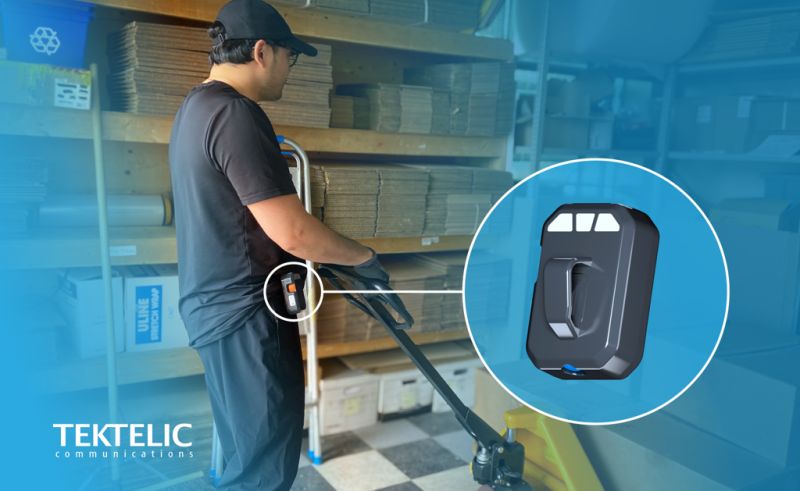
SEAL – wearable safety monitoring for industrial employees
SEAL is designed for worker safety monitoring in standard industrial environments such as factories, utilities, warehouses, ports, and large facilities.
It supports core safety needs, including:
-
Emergency alerts through a panic button
-
Automatic fall detection
-
Outdoor GPS tracking and indoor location awareness
-
Support for lone worker safety monitoring
-
Geofencing to help manage restricted or high-risk workplace zones
In practice, SEAL helps employers improve workplace safety by reducing response time during incidents and by giving the monitoring team clear visibility into where help is needed.
For employees, this means added protection during lone work, maintenance tasks, inspections, and daily operations across the site.

SEAL Ex – extending worker protection into hazardous areas
Some workplaces include zones where explosive gases, vapors, or dust may be present. In these environments, safety monitoring requires certified equipment that meets strict regulations.
SEAL Ex is designed for use in hazardous areas and supports the same worker safety monitoring approach as SEAL, while meeting certification requirements for classified zones.
This allows businesses to:
-
Apply a consistent lone worker safety policy across the site
-
Protect employees working in hazardous areas
-
Avoid switching devices or workflows between safe and classified zones
-
Maintain compliance without losing safety visibility
SEAL Ex is commonly used in industries such as oil and gas, chemicals, energy, and heavy industrial operations where employee safety and regulatory compliance are equally critical.

LOCUS application — where safety and location become visible
Wearable devices are only part of worker safety monitoring. Safety teams also need one clear place where alerts and location data are easy to see and act on.
The LOCUS application is the visibility layer that brings everything together. It shows worker location (indoor and outdoor where available), and it helps the monitoring team respond when something happens.
With LOCUS, safety and operations teams can:
-
See the current or last known location of employees
-
Receive panic button and fall detection alerts
-
Monitor lone worker activity and zone entries (geofences)
-
Review event history for safety management, reporting, and improvements
In short, SEAL and SEAL Ex collect the safety events in the field, and LOCUS makes them visible so teams can respond faster and improve workplace safety over time.

Real deployment spotlight — worker tracking at Moeve Energy Park
To bring these capabilities into a real industrial setting, consider how a leading energy company approached the challenge of safety and operations during site expansion.
At the La Rábida Energy Park in Spain, Moeve implemented a track & trace solution that provides real-time visibility across people, vehicles, and equipment. The solution was developed on a scalable IoT and cloud platform to support both safety and operational goals.
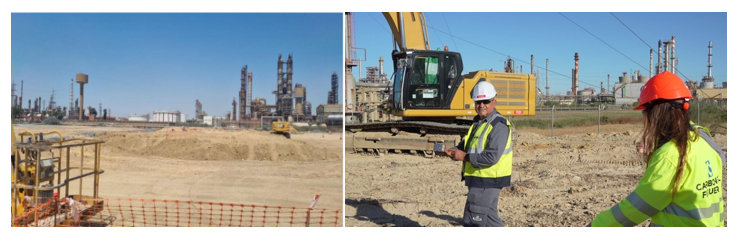
Workers and assets were equipped with tracking devices that report their location over a LoRaWAN® network. These devices send position updates to a cloud platform where they are processed and visualized. The platform uses custom site maps so that workers and responders can see precise locations even on newly built roads or evolving work areas where standard digital maps are not yet available.
Dynamic geofences were defined around hazards and restricted areas to issue alerts when people or machinery moved too close. Evacuation paths and circulation plans were created based on real-time movement and mapped routes.
This real deployment shows how a modern safety monitoring system can scale across an operational site, provide instant awareness for safety teams, and support data-driven decisions for both safety and workflow optimization.
Read the full case study: Expanding Moeve’s Energy Parks with a Track & Trace Solution
Conclusion
For many industrial workplaces, safety challenges are not caused by a lack of rules or effort. They are caused by limited visibility at the exact moment when time matters most.
When employers know where employees are, when something has gone wrong, and how quickly the monitoring team can respond, safety becomes easier to manage. Incidents are handled faster. Lone workers feel more supported. Risks are spotted earlier. Safety culture improves because people trust the process.
This is what worker safety monitoring is really about: supporting safety protocols with clearer awareness, faster alerts, and practical workflows that reduce uncertainty.
If you are reviewing your lone worker policy or looking to strengthen workplace safety across your workforce, it may be worth evaluating whether a worker safety monitoring solution fits your site layout, risk zones, and response process—and what benefits you could measure in the first 90 days.
