Expertise
2 min reading
1 December 2023
1 December 2023
Power of LoRaWAN® Gateways Designed for Extreme Conditions

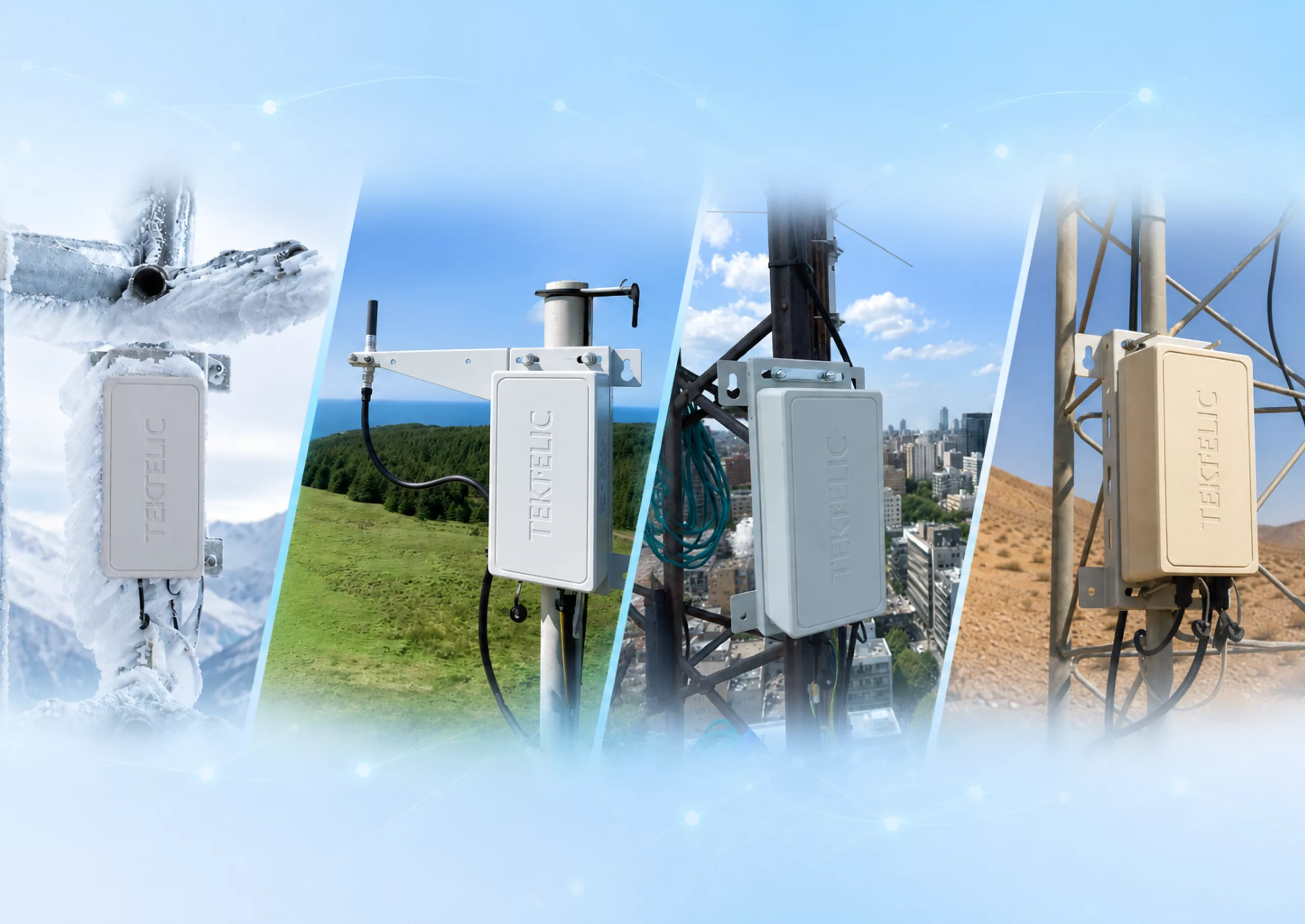
If you operate or build IoT networks, the gateway is the single point every device depends on. Put it on a pole in the desert, on a coastal tower, or at a remote well site, and "works on the bench" is no longer good enough.
This guide explains what an outdoor LoRaWAN® gateway actually is, the specifications and standards that separate a truly rugged unit from a repackaged indoor one, and how to read a datasheet before you commit to a multi-year deployment.
What is an outdoor LoRaWAN gateway?
An outdoor LoRaWAN gateway is a tough radio access point. It gathers data from LoRaWAN sensors over long distances and sends it to a network server using Ethernet or cellular. Unlike indoor gateways, outdoor models are built to endure harsh conditions. They can function in direct sunlight, freezing weather, rain, dust, salt air, and electrical storms, usually for over 10 years.
These differences matter and focus on four main areas: operating temperature range, ingress-protection (IP) rating, surge and lightning protection, and reliability testing for the enclosure. The rest of this guide explains each aspect and provides real comparisons.
Indoor vs. outdoor in one line: An indoor LoRaWAN gateway is designed for cost and easy setup; an outdoor gateway is made to last, seal well, and run reliably in tough environments that would quickly damage an indoor unit.
Why extreme temperature, voltage, and humidity testing matters
Many hardware issues only become visible when equipment is exposed to extreme temperatures or unstable power conditions. That's why manufacturers test gateways in both the hottest and coldest operating environments, as well as under different power conditions, before releasing them to the market.
If a gateway continues to operate reliably at both -40 °C and +60 °C, even when power conditions vary, it gives confidence that the hardware has been thoroughly tested before deployment.
When you evaluate a gateway, treat these as spec lines to verify on the datasheet, not adjectives in a brochure:
- Operating temperature
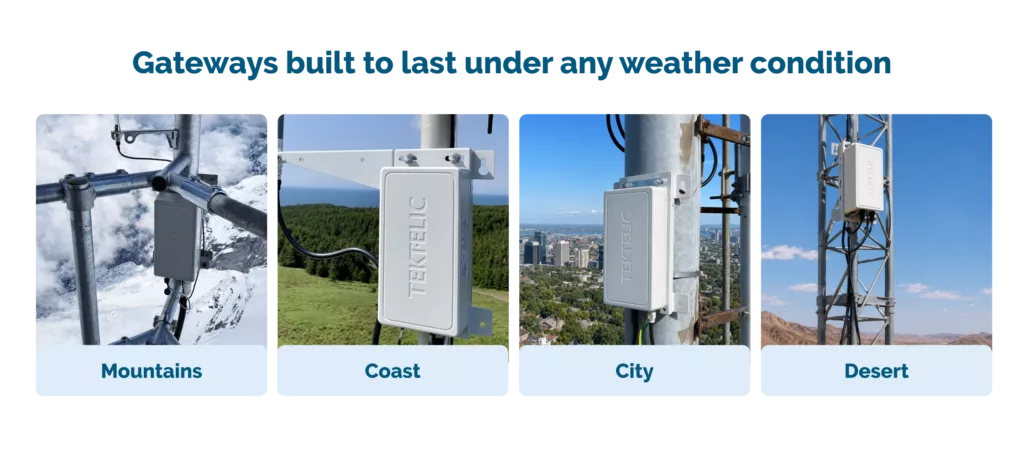
Many outdoor gateways are designed to operate between -40 °C and +60 °C. This is important because equipment installed on rooftops, towers, or utility poles can experience extreme heat and cold throughout the year. Keep in mind that direct sunlight can make a gateway even hotter than the surrounding air temperature.
- Operating humidity
Look for gateways that can operate in 10% to 100% humidity, including condensing conditions. Condensation occurs when moisture forms on surfaces, which is common in coastal regions, tropical climates, and areas with large temperature changes.
- Reliability (MTBF)
Some manufacturers publish an MTBF (Mean Time Between Failures) rating. While this number does not predict exactly how long a gateway will last, it provides an indication of the product's expected reliability and helps compare different models.
Surviving extreme heat and cold
Punishing thermal environments are the norm, not the exception: rooftops and towers in summer sun, sub-arctic winters with ice and snow loading. Gateways built for this combine an environmentally hardened enclosure (often aluminium), passive cooling so there are no fans to fail, and firmware validated across the full range.
The practical test is simple: Does the datasheet state a continuous operating range that brackets your worst recorded site temperature with margin, and does it account for solar gain?
Coastal and corrosive environments
Coastal environments can be particularly challenging for outdoor infrastructure. Salt, moisture, humidity, and constant exposure to the elements can gradually damage enclosures, connectors, and electronic components, leading to reduced performance and higher maintenance costs over time.
When evaluating a gateway for coastal or marine deployments, consider the following:
- IP67 or higher protection to help prevent dust and water from entering the enclosure.
- Weatherproof antenna and cable connections to reduce the risk of moisture-related failures.
- Corrosion-resistant materials and coatings, such as UV-resistant enclosures and protected internal electronics, designed for long-term outdoor use.
In environments where gateways are difficult to access, choosing hardware designed to withstand these conditions can help reduce maintenance visits and extend the life of the deployment.
Lightning and surge protection
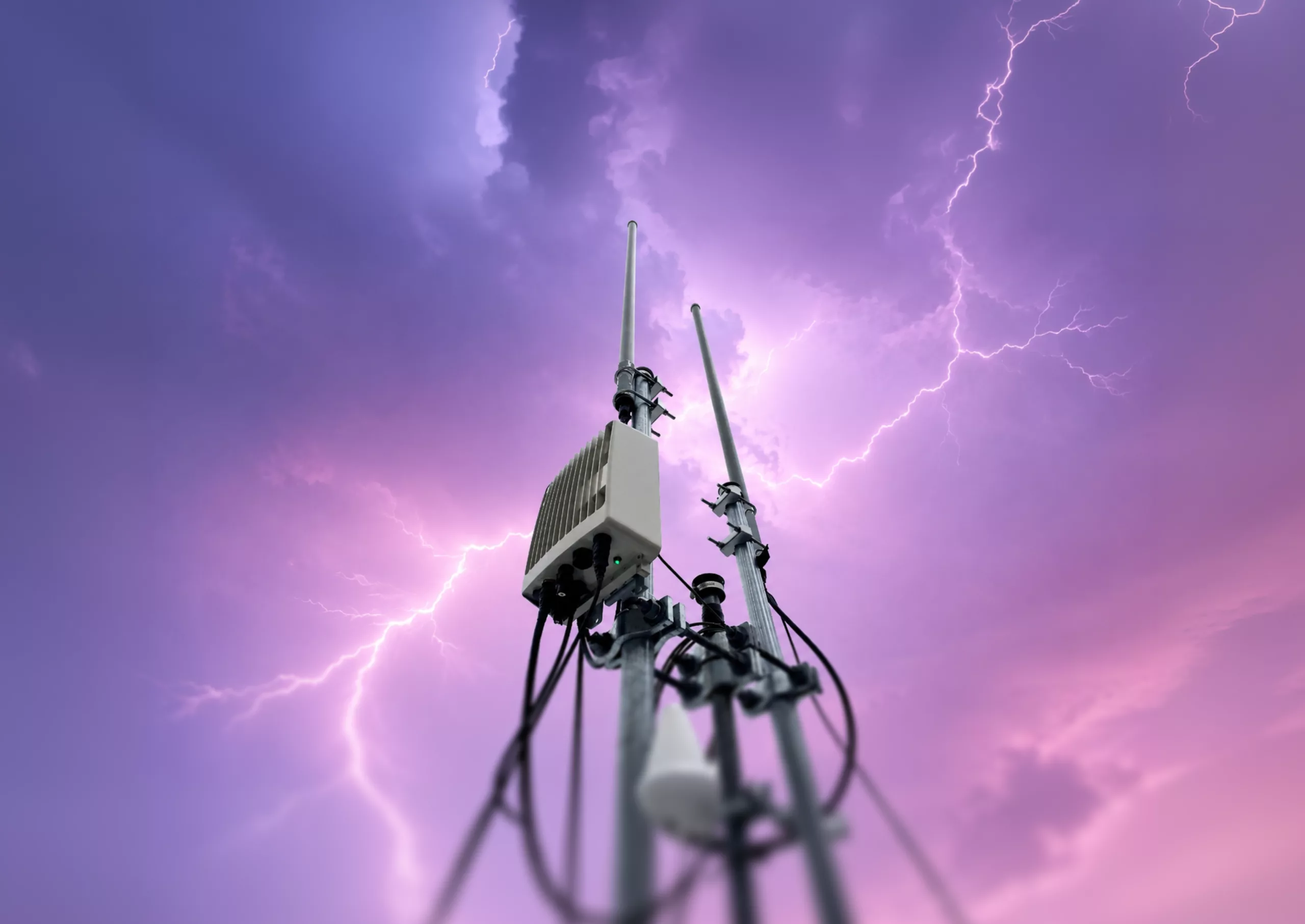
If your gateway lives outdoors, lightning is one of the biggest threats to its survival. A nearby strike doesn't have to score a direct hit to cause damage, the electrical surge it sends through power lines, antenna cables, and network connections is often enough to fry unprotected electronics. For anything deployed in an open field, on a rooftop, or up a tower, surge protection isn't a nice-to-have. It's the difference between a gateway that lasts years and one that dies in the first storm season.
The challenge is that this is exactly where cheaper "outdoor" gateways tend to compromize, because good protection adds cost and the weakness only shows up after something goes wrong. So it's worth checking carefully.
What to look for when evaluating a gateway
- Recognized industry certifications
When evaluating an outdoor gateway, start by reviewing the certifications listed on the datasheet. Standards related to surge protection, electrostatic discharge (ESD), and electrical interference help verify that the gateway has been tested under real-world conditions and is designed to withstand common electrical events that occur in the field.
- Protection for critical connections
Power, Ethernet, and antenna connections are common entry points for electrical surges. Look for gateways that include built-in protection for these interfaces and support the use of external surge protection where required. This helps reduce the risk of equipment damage and unexpected downtime.
- Proper grounding support
Even the most rugged gateway can be vulnerable if it is not installed correctly. Proper grounding provides a safe path for electrical surges and is one of the most important factors in protecting outdoor equipment. When deploying a gateway, ensure that grounding requirements are followed and that the hardware is designed to support effective grounding practices.
Why it matters
A single lightning event or power surge can lead to equipment failures, network outages, and costly maintenance visits. Taking the time to verify protection features before deployment can help improve network reliability, reduce operational risks, and extend the life of the installation.

Spec comparison: what to check before you buy
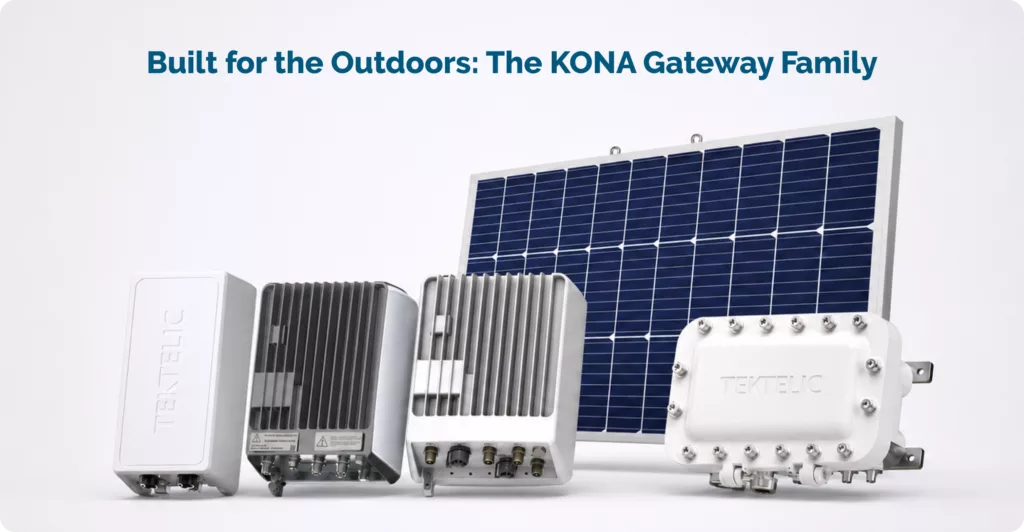
Use this as a checklist for choosing the right LoRaWAN® gateway. The two right-hand columns show TEKTELIC's carrier-grade outdoor models so you can see what real "extreme-conditions" numbers look like.
| Specification | Why It Matters | KONA Macro | KONA Mega |
| Typical deployment | Helps match the gateway to the size and requirements of the network. | Compact outdoor deployments, campuses, smart buildings, utilities | Large-scale, high-density networks, smart cities, utilities, carrier deployments |
| Operating temperature | Ensures reliable operation in extreme heat and cold. | -40 °C to +60 °C | -40 °C to +60 °C |
| Operating humidity | Important for coastal, tropical, and high-moisture environments where condensation can occur. | 10–100% condensing | 10–100% condensing |
| Ingress protection (IP Rating) | Protects the gateway from dust, rain, and water ingress during outdoor operation. | IP67 | IP67 |
| LoRaWAN capacity | Determines how well the gateway can support network growth and increasing device counts. | Designed for scalable outdoor deployments | Supports up to 12 million messages per day |
| Radio configuration | Impacts the number of devices and amount of traffic the gateway can handle efficiently. | 16 Rx / 2 Tx | 64+8 Rx / 4 Tx |
| Transmit power/ Receiver sensitivity | Affects network coverage and the ability to receive weak sensor signals. | 27 dBm / -142 dBm | 1 W (2 × 27 dBm) / -142 dBm |
| Backhaul options | Provides connectivity between the gateway and network server. | Ethernet, integrated cellular modem | Ethernet, integrated cellular modem |
| Power options | Determines installation flexibility, including PoE and remote deployments. | 37–57 VDC or PoE (802.3at) | 37–57 VDC or PoE++ (802.3bt) |
| Power consumption | Lower power consumption can reduce operating costs and support solar-powered deployments. | 14 W typical | 20 W typical |
| Reliability (MTBF) | Indicates the expected long-term reliability of the hardware. | 850,000 hours | 450,000 hours |
| Safety certifications | Demonstrates compliance with recognized product safety standards. | UL / CSA / EN / IEC 62368-1 | UL / CSA / EN / IEC 62368-1 |
Specifications vary by frequency-band variant; always confirm against the current datasheet for your region.

The payoff: Why rugged hardware saves money
Choosing a gateway designed for harsh environments is not just about surviving the weather, it's about protecting your investment and reducing operational costs over the long term.
- Fewer maintenance visits
Every truck roll costs time and money. Reliable outdoor gateways help reduce emergency site visits, especially in remote locations where access may be difficult or expensive. - Lower operating costs
Hardware failures lead to replacement costs, service interruptions, and additional labor. Durable gateways can remain in service for 10–15 years, helping organizations lower their total cost of ownership. - Higher network uptime
A network is only as reliable as the infrastructure behind it. Rugged gateways help keep sensors connected and data flowing, even in challenging environmental conditions. - Faster project deployment and expansion
Reliable infrastructure reduces delays caused by equipment failures, replacements, or troubleshooting, helping organizations scale their networks with confidence. - Better business decisions
Accurate, continuous data is the foundation of smart city, utility, industrial, and facility management applications. Consistent gateway performance helps ensure that data remains available when it is needed most.

Real-world TEKTELIC success stories on gateways for challenging environments
When a gateway is installed on a rooftop, utility pole, mountain, or industrial site, replacing it is rarely as simple as swapping a device. Every maintenance visit requires time, labor, and cost, especially in remote or hard-to-access locations. That's why TEKTELIC's approach has always focused on building carrier-grade gateways designed for long-term reliability rather than simply meeting minimum specifications.
TEKTELIC gateways are engineered and tested to operate in challenging environments, including extreme temperatures, high humidity, direct sunlight, snow, ice, and industrial conditions. The goal is simple: deliver infrastructure that continues to perform reliably year after year while minimizing maintenance requirements and operational costs.
This approach is reflected in real deployments around the world. KONA Macro gateways have been operating for years at an altitude of 3,710 meters in the Swiss Alps, exposed to snow, ice, strong winds, and significant temperature fluctuations. TEKTELIC gateways have also been selected for nationwide LoRaWAN® network deployments across the Czech Republic and the United States, where reliable coverage and long-term network performance are critical. In cities such as Gradiska, Bosnia and Herzegovina, KONA Macro gateways support smart water management and other municipal services, helping cities build dependable IoT infrastructure for the future.
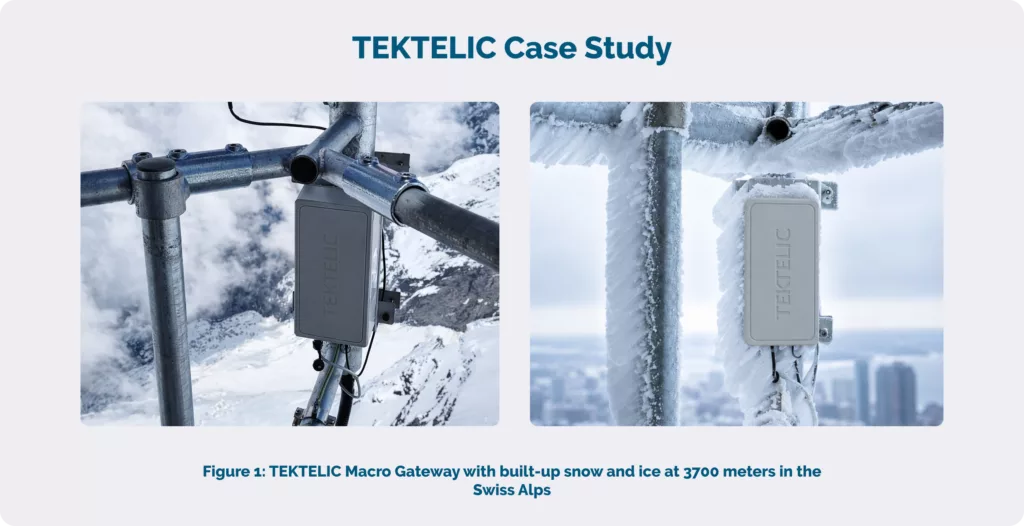
These deployments demonstrate an important principle: when a network grows from a few gateways to dozens or hundreds of locations, reliability becomes one of the most important factors in the success of the project. Hardware that continues to operate in harsh environments helps reduce maintenance costs, improve uptime, and protect the long-term investment in the network.
Conclusion
Choosing a LoRaWAN® gateway for an outdoor deployment involves more than comparing coverage or price. Environmental conditions, reliability, surge protection, and long-term performance can all have a significant impact on network uptime, maintenance requirements, and overall project success.
The goal of this guide was to help readers understand the key factors that differentiate a gateway designed for harsh environments from one intended for more controlled conditions. By evaluating specifications such as operating temperature, IP rating, reliability, and deployment requirements, organizations can make more informed decisions and avoid costly issues later in the project lifecycle.
Whether you are planning a smart city, utility, industrial, or environmental monitoring deployment, investing time in selecting the right infrastructure from the start can help build a network that remains reliable for years to come.
To learn more about what LoRaWAN is or how to build a resilient wireless sensor network, explore our resources or contact us to match the right gateway to your deployment.