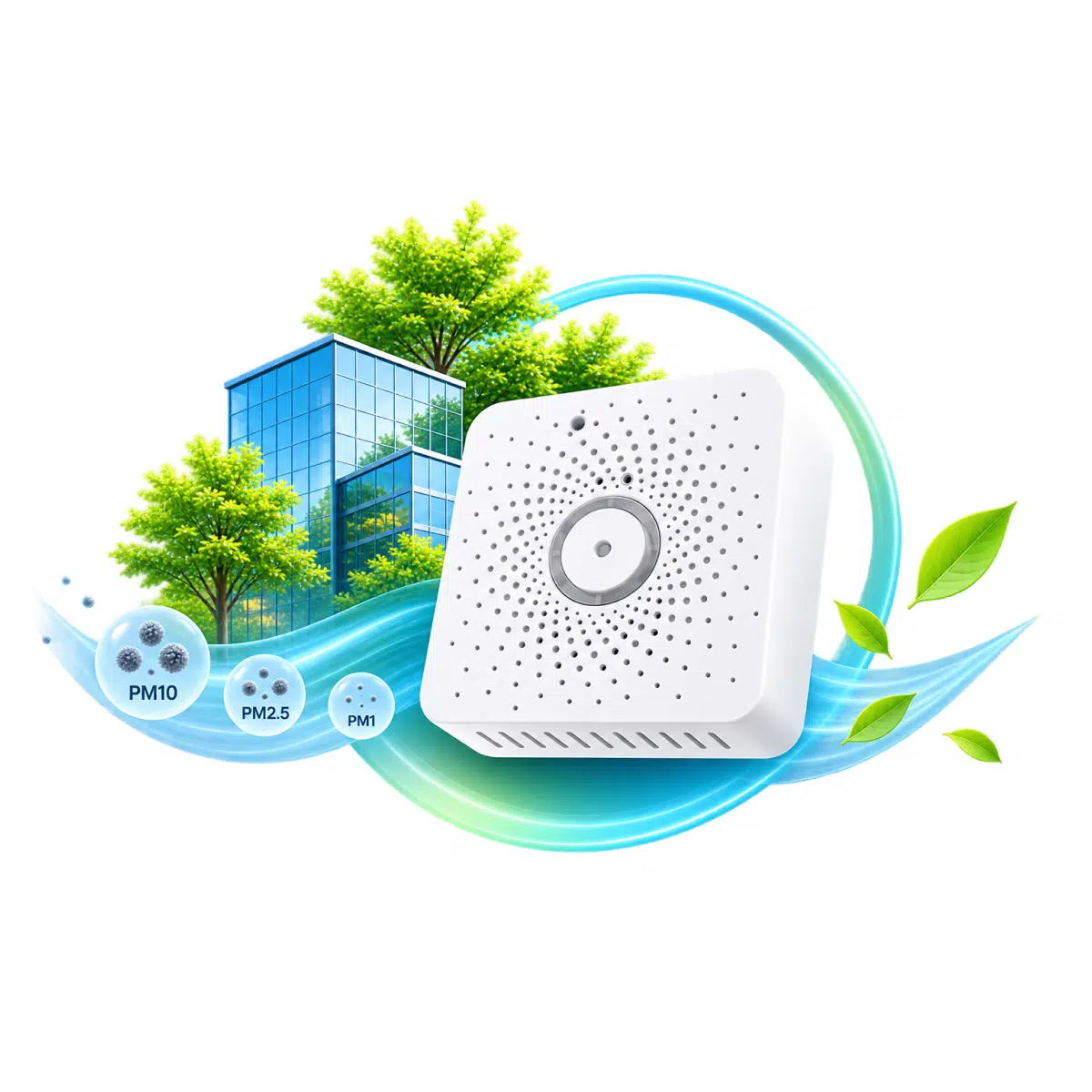
Wireless Particulate Matter Monitoring for Healthier Indoor Spaces

Detect airborne particulate pollution before it becomes a persistent indoor air quality problem. TEKTELIC’s solutions provide continuous visibility into PM levels across buildings while simplifying deployment through scalable LoRaWAN® connectivity.

PM1, PM2.5 & PM10

continuous particle monitoring

7+ years

battery life

Zero wiring

fast wireless deployment

Real-time visibility

into indoor particle levels

See the Air Quality Problems Other Sensors Can Miss

Temperature, humidity, and CO₂ provide valuable information about indoor environments, but they do not tell the entire story. Dust, smoke and other airborne particles can change quickly while remaining invisible to occupants and facility teams.
Wireless particulate matter monitoring gives building operators continuous visibility into particle concentrations across individual rooms and zones. Instead of relying on complaints, occasional inspections, or isolated handheld measurements, teams can identify trends, investigate events, and connect particulate information to existing building workflows.
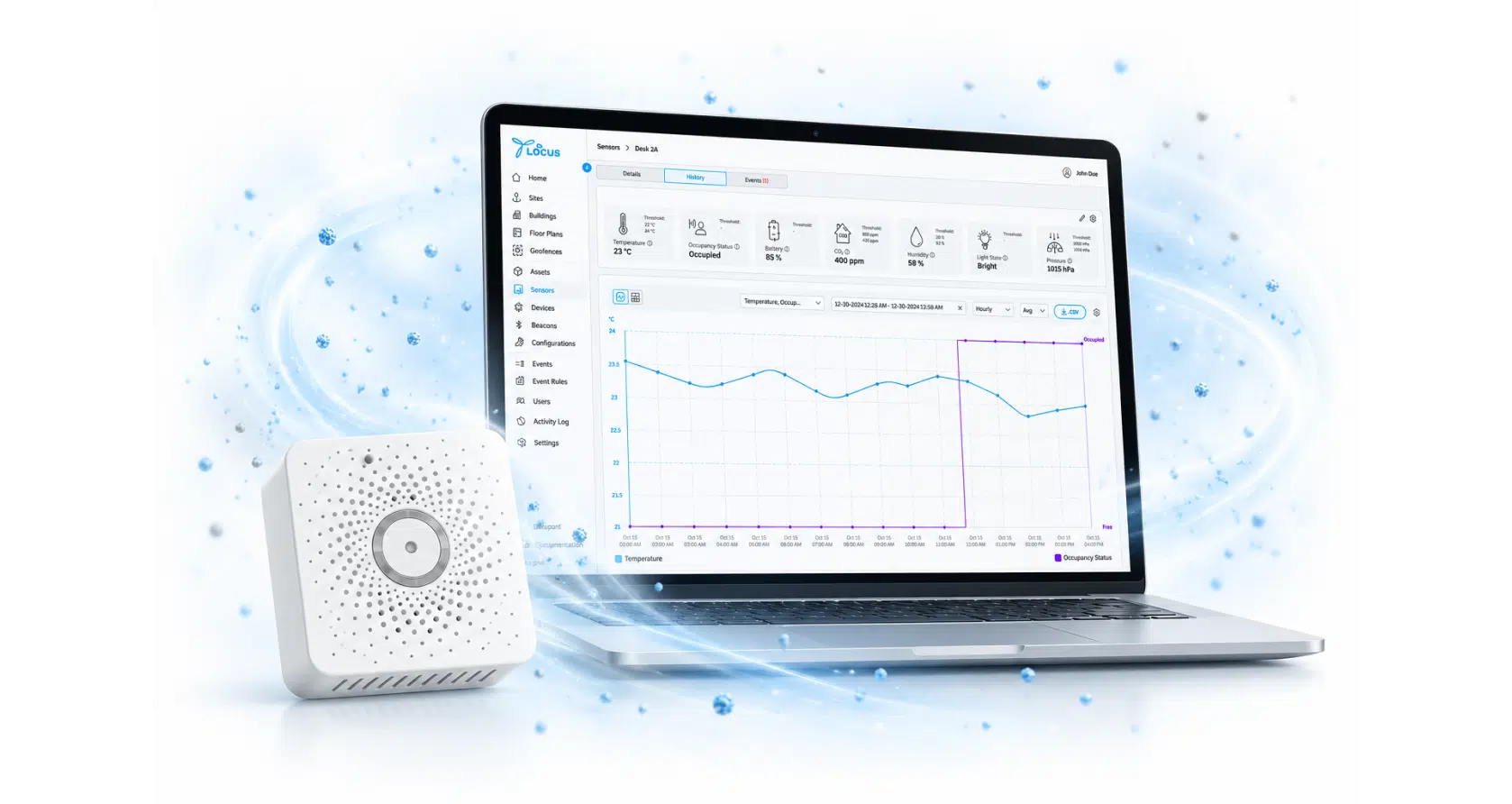
Particulate monitoring sensor

Out-of-the-Box Solution for Scalable Particulate Matter Monitoring

Simple 4-Step Deployment​

1 Scan

Onboard devices instantly with a QR code

2 Activate

Configure sensors and gateways in minutes using the LeapX app.

3 Install

Mount wireless devices without running new cables. 

03_install
4 Monitor

Access live indoor air quality data, alerts, and trends from anywhere.

Breeze App

Instantly monitor air
quality in real-time

01_breeze

LeapX App

Onboard any device in
minutes with a QR code scan​

02_leapx

BMS Integration

Connect LoRaWAN® sensors to your BMS via KONA gateways with Embedded LNS, using BACnet/IP or Modbus TCP.

LOCUS App

Monitor building conditions, visualize sensor data, and manage alerts across multiple rooms, floors, and locations from one platform.

04_locus_app

Build Better Visibility Into Indoor Particulate Conditions

Tell us about your buildings, monitoring objectives and existing infrastructure. We can help design a wireless particulate monitoring architecture that fits your operational and integration requirements.

From Airborne Particles to Actionable Building Data

TEKTELIC connects wireless monitoring points with scalable LoRaWAN® infrastructure, data platforms and integration capabilities to help transform environmental readings into useful operational information.

Through open APIs and standard protocols, that data flows straight into your existing BMS or BAS — where it can trigger ventilation adjustments, feed alerts and inform maintenance decisions automatically.
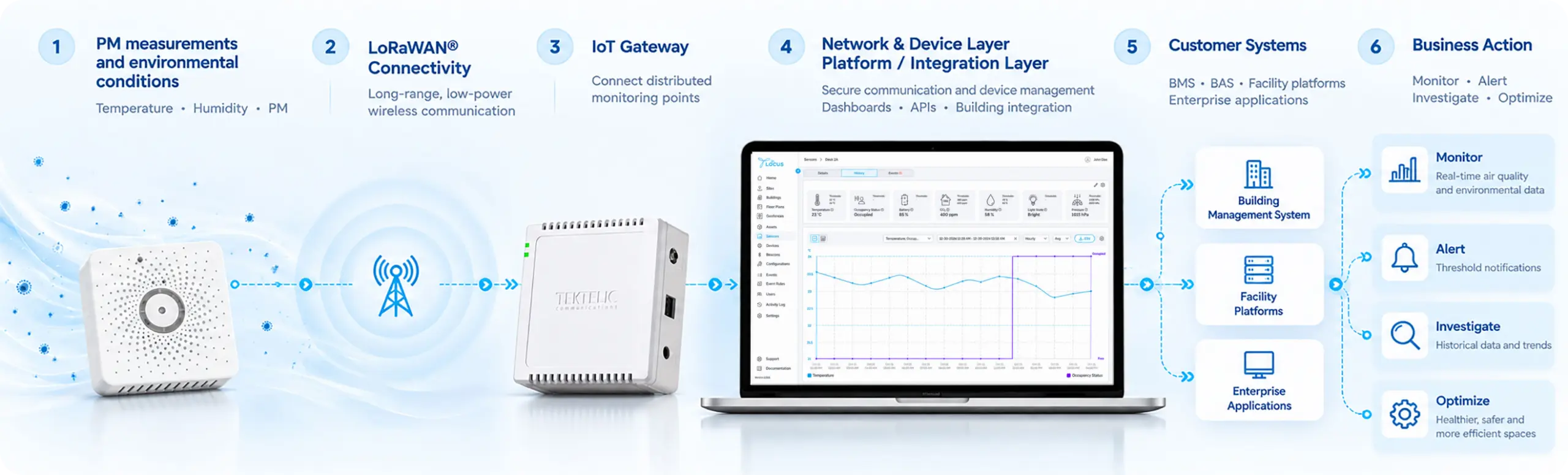
facility_bms_architecture

Particulate Monitoring for Critical Indoor Environments

Airborne particles come from different sources in every building and the reasons for monitoring them vary just as much. Wireless PM monitoring adds a scalable layer of environmental visibility across the facility types where indoor particle conditions matter most.

Commercial Buildings & Offices

Monitor airborne particles to investigate air quality complaints, identify recurring dust events, and provide facility teams with data on indoor conditions.


Schools & Universities

Monitor particulate levels across classrooms, laboratories, gyms, and common areas without new communication cabling, including in older buildings and across multiple campuses.

Healthcare Facilities

Track particulate levels in patient-occupied areas, assess filtration and ventilation performance, and identify changes caused by construction, outdoor pollution, or daily activities.

Manufacturing & Industrial Facilities

Monitor airborne particles across production and work areas, evaluate dust-control measures, and identify changes that require further investigation.

Retail & Hospitality

Monitor airborne particles in stores, hotels, restaurants, and shared spaces to identify dust events, assess indoor conditions, and maintain a comfortable environment for customers and guests.

Public buildings

Track particulate levels in libraries, government offices, community centers, and other public facilities to identify air quality changes, assess filtration performance, and support healthier indoor environments.

benefits that matter

Make Particulate Monitoring Work for Your Business

Monitor particulate

Monitor particulate pollution your eyes can’t see

Continuously measure PM1, PM2.5 and PM10 instead of relying on occasional checks or waiting for occupants to notice poor conditions.

Respond faster to changing conditions

Identify elevated particulate levels early so facility teams can investigate sources and respond before poor conditions persist.

Create healthier indoor environments

Use continuous particulate data to support better indoor air quality and more comfortable spaces for employees, students, guests, patients, and visitors.

Understand air quality over time

Move beyond a single reading. Historical particulate data helps reveal recurring patterns and changes in indoor environmental conditions.

Scale monitoring without new wiring

LoRaWAN® connectivity makes it possible to add particulate monitoring across rooms, floors, and buildings without installing new data cabling.

Minimize ongoing maintenance with proactive monitoring

Long battery life and wireless communication make AERIS suitable for scalable deployments with less infrastructure and routine maintenance.

Lower Your Environmental Impact Without More Maintenance

Traditional air quality upgrades often mean new cabling, invasive installation work, and devices that need servicing every year or two. TEKTELIC takes a different approach — particulate monitoring that scales across your buildings while keeping its own footprint small.

eco image

Frequently-asked questions

Particulate matter monitoring measures concentrations of small airborne particles within an environment. Different particle-size categories provide visibility into different fractions of airborne material. Continuous monitoring allows facility teams to understand how particulate conditions change over time rather than relying on occasional manual measurements. 

PM1, PM2.5 and PM10 refer to particulate matter categories based on particle size. Monitoring multiple fractions gives facility teams a more detailed view of airborne particle conditions and helps identify how particulate concentrations vary across different locations and events. 

Particles from outdoor pollution, construction, smoke, cleaning activities, occupants and operational processes can enter or develop inside buildings. Continuous indoor monitoring helps facility teams identify changes, investigate potential sources and better understand indoor air quality conditions. 

Yes. CO₂ monitoring is commonly used to understand ventilation and occupancy-related conditions, while particulate monitoring measures airborne particles. Using multiple environmental measurements together can provide a more complete picture of indoor conditions than relying on a single parameter.

Sensors measure particulate conditions and transmit readings through a wireless IoT network. Gateways collect the data and send it to a monitoring or integration platform where teams can visualize trends, configure alerts and connect information to other operational systems.

Yes. Wireless particulate data can be incorporated into broader building-management architectures. Depending on the selected implementation, integration options can allow environmental readings to appear alongside other BMS data and support alerts, analytics or building-control workflows. 

Placement depends on the monitoring objective. Sensors may be installed in occupied areas, near suspected particulate sources, around renovation zones, in critical equipment rooms or at representative locations associated with HVAC and filtration systems. 

When supported by the connected building platform, particulate readings can be used as inputs for operational rules. For example, predefined thresholds or trends may generate alarms or contribute to filtration, ventilation or maintenance workflows. 

Yes. LoRaWAN® connectivity is designed to support distributed IoT devices over wide areas with low power consumption. This makes it possible to extend particulate monitoring across rooms, floors, buildings and multi-site portfolios using shared network infrastructure.