Expertise
5 min reading
20 November 2026
20 November 2026
WBGT Explained: Why Air Temperature Alone Can’t Tell You When Heat Is Dangerous


The same air temperature can be manageable in a dry, breezy park and dangerous on a humid, sunlit sports field. A thermometer can't tell the difference. Wet Bulb Globe Temperature (WBGT) can.
WBGT brings together the environmental factors that affect heat stress, so people and organisations can decide when to reduce exposure, change activities or add protection. Local monitoring matters most in hot, humid countries and at exposed public spaces and workplaces, where conditions can change from one spot to the next.
This guide explains what WBGT measures, how it's calculated, and what the readings mean in practice. It then compares heat stress across 5 hot cities and shows how continuous local monitoring helps organizations act earlier.
What is WBGT?
Wet Bulb Globe Temperature (WBGT) is an environmental heat-stress index, expressed in degrees Celsius, that combines air temperature, humidity, radiant heat and air movement into a single value. The international standard ISO 7243 describes WBGT as a screening method for heat stress.
Because it blends four factors, WBGT is different from the temperatures people usually talk about:
| Measure |
What it captures |
|
Air (dry-bulb) temperature |
How hot the air is |
| Wet-bulb temperature | Air temperature and humidity combined, through evaporative cooling |
| Body temperature | A person's internal temperature |
| WBGT | Air temperature, humidity, radiant heat and air movement combined |
A WBGT reading of 31°C does not mean the air is 31°C. It reflects the combined effects of environmental factors that contribute to heat stress, which is why WBGT readings can differ from the air temperatures people are used to seeing in a forecast.
Why humidity, sun and airflow change how dangerous heat is
In hot conditions, sweating is one of the body's main cooling mechanisms, but sweat only cools the body when it evaporates. Several environmental factors influence how effectively the body can release heat, while physical activity generates additional heat:
- Humidity slows evaporation, so sweat cools the body less effectively.
- Sunshine and hot surfaces add radiant heat on top of the air temperature.
- Restricted airflow limits the cooling that moving air provides.
Physical exertion generates extra heat in the body, so the same conditions pose greater risk during work or sport.
Not everyone faces the same risk. Older adults, children, people with some chronic illnesses and those unaccustomed to the climate can need greater protection. Heat can also worsen existing disease, and heatstroke is a medical emergency.
This is why a single value that reflects all of these conditions is a better basis for decisions than air temperature alone. The next question is how that value is produced.
How is WBGT measured?
The conventional method uses three thermometers, each capturing a different part of the heat load:
- Natural wet-bulb thermometer: covered with a wet wick, it captures evaporative cooling, which depends on humidity and air movement.
- Black-globe thermometer: placed inside a black globe, it captures radiant heat from the sun and hot surfaces, along with airflow effects.
- Dry-bulb thermometer: measures air temperature.
The three readings are combined with weighted formulas:
- Outdoors, with solar exposure: WBGT = 0.7 × natural wet-bulb + 0.2 × globe + 0.1 × air temperature
- Indoors or without solar exposure: WBGT = 0.7 × natural wet-bulb + 0.3 × globe temperature
In both formulas, the natural wet-bulb reading carries 70% of the weight. That shows how strongly humidity and evaporative cooling drive heat stress.
What to check in electronic WBGT instruments
Many electronic instruments estimate certain components rather than using a wet wick, so their calculation methods and validation matter. A calculation based only on air temperature and humidity cannot independently capture changing solar radiation and airflow.
Whatever the instrument, position it so it reflects people's actual exposure, and allow the specified stabilization time before relying on the reading.
What WBGT level is dangerous?
There is no universal WBGT number at which every person must stop every activity. The right response depends on workload, clothing, acclimatization, exposure duration and health. National guidance does, however, provide useful reference points:
| Country and context | WBGT | Guidance |
| Japan, exercise | 31°C or higher | Generally stop exercise |
| Singapore, public advisory | 31°C to below 33°C | Moderate heat stress: reduce outdoor activity and rest more |
| Singapore, public advisory | 33°C or higher | High heat stress: minimise outdoor activity and rest more |
| Singapore, heavy physical work | From 32°C | At least 10 minutes' rest per hour (required) |
| Singapore, heavy physical work | From 33°C | At least 15 minutes' rest per hour (advised) |
For outdoor work, always follow the occupational rules that apply in your jurisdiction. The values above are jurisdiction-specific measures, not universal safe limits, and heat risk can exist below them.
How hot does it get?
In summer, the average daily peak WBGT in shade reaches 31–33°C in Gulf cities. In equatorial cities such as Singapore, Kuala Lumpur and Jakarta, it stays between 27°C and 30°C almost all year.
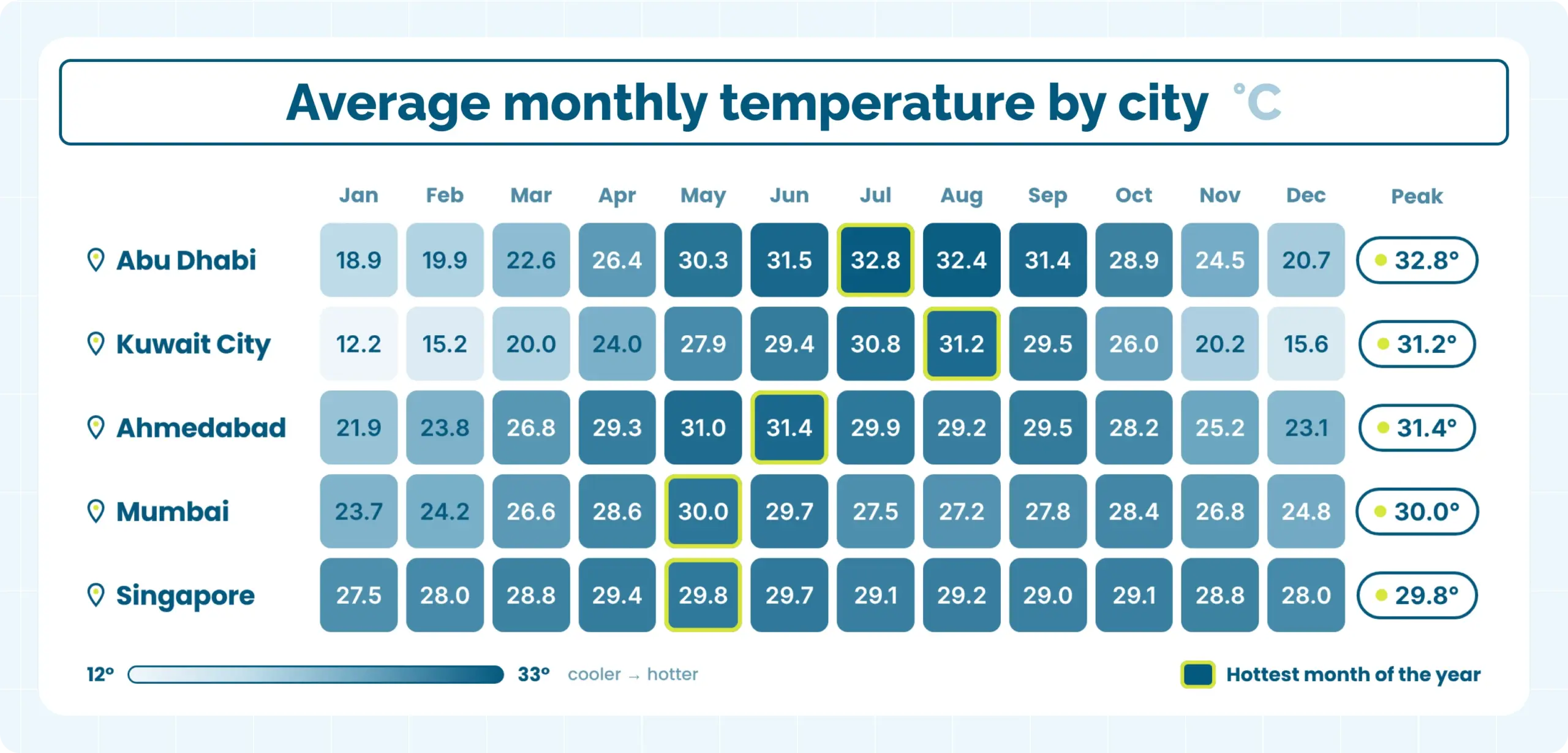
The table shows approximate monthly averages of the estimated daily maximum WBGT in shade for 2007–2016. That is the latest complete ten-year period in the CHC-CMIP6 historical archive used for this analysis. Values come from representative city-center locations on 0.05° grids, averaged across the ten years and weighted by the number of days. The cities illustrate major heat-exposure regions.
Monthly average of daily maximum WBGT in shade, °C, 2007–2016. Bold marks each city's peak month.
Each city tells a different story. Abu Dhabi has the highest peak and stays above Japan's 31°C reference for stopping exercise from June to September, even in the shade. Kuwait City has the widest swing, from 12.2°C in January to 31.2°C in August.
Ahmedabad and Mumbai both peak before the monsoon, but the coast changes what follows. Mumbai drops to about 27°C in July and August, while inland Ahmedabad stays near 29–30°C. Singapore never averages above 30°C, yet its yearly range is just 2.3°C, so heat stress barely lets up.
The picture changes in direct sunlight, which adds roughly 4–7°C to the daily maximum depending on location. A summer afternoon in the sun in Abu Dhabi could therefore approach 36–40°C WBGT. Even in Singapore, sunny peaks could pass 33°C, the level Singapore classifies as high heat stress.
How to read these figures
The source estimates shaded or indoor WBGT at a fixed air speed of 0.5 m/s from the heat index, using daily maximum air temperature and the humidity at that hour. These values are a proxy for daily maximum WBGT, not direct measurements. They are neither monthly record highs nor averages over all hours of the day.
They also describe a historical baseline, not current 2026 conditions or the hottest individual days. Averages smooth out exactly the days when people are most at risk, so operational decisions need on-site measurements.
How TEKTELIC supports heat safety
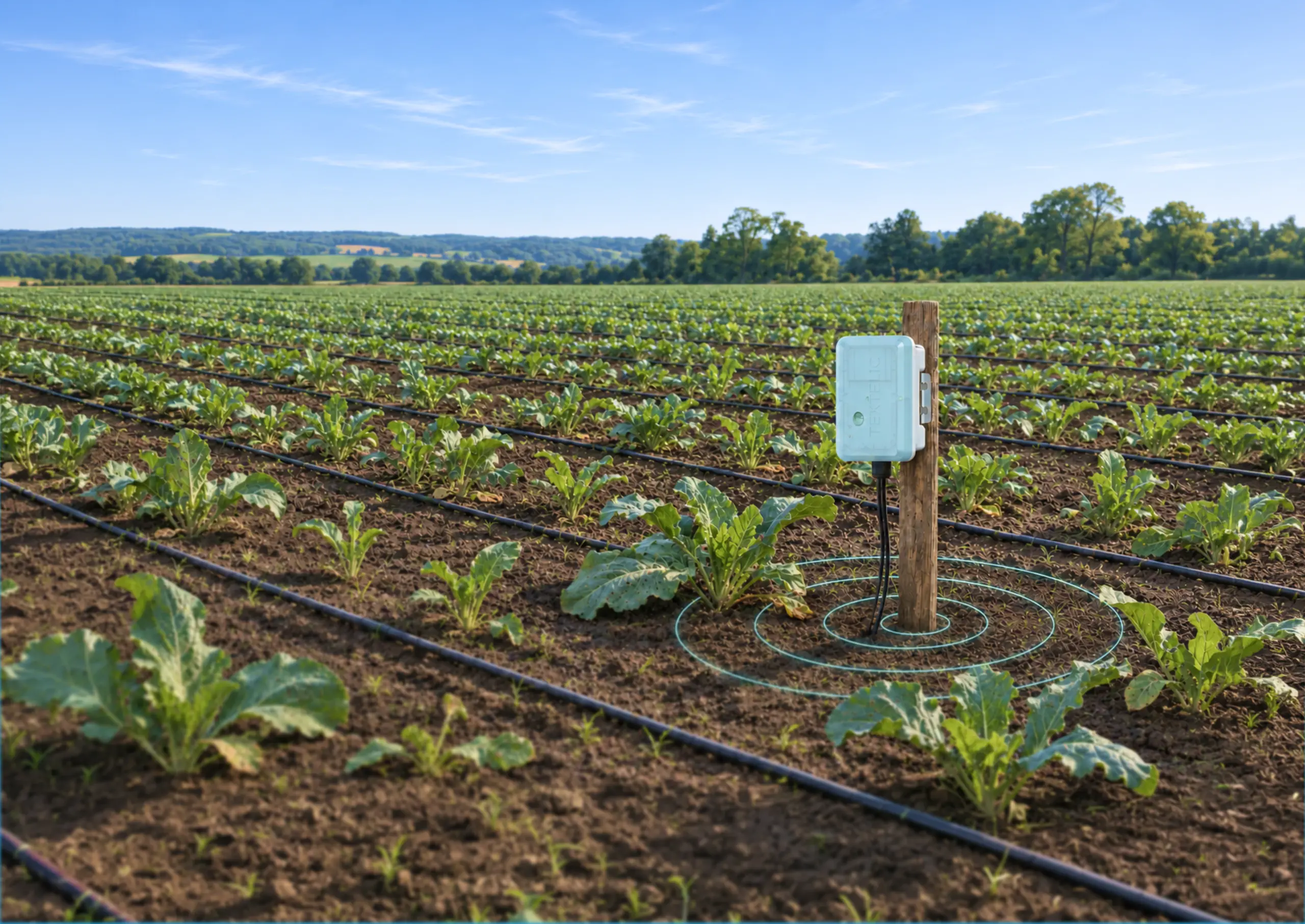
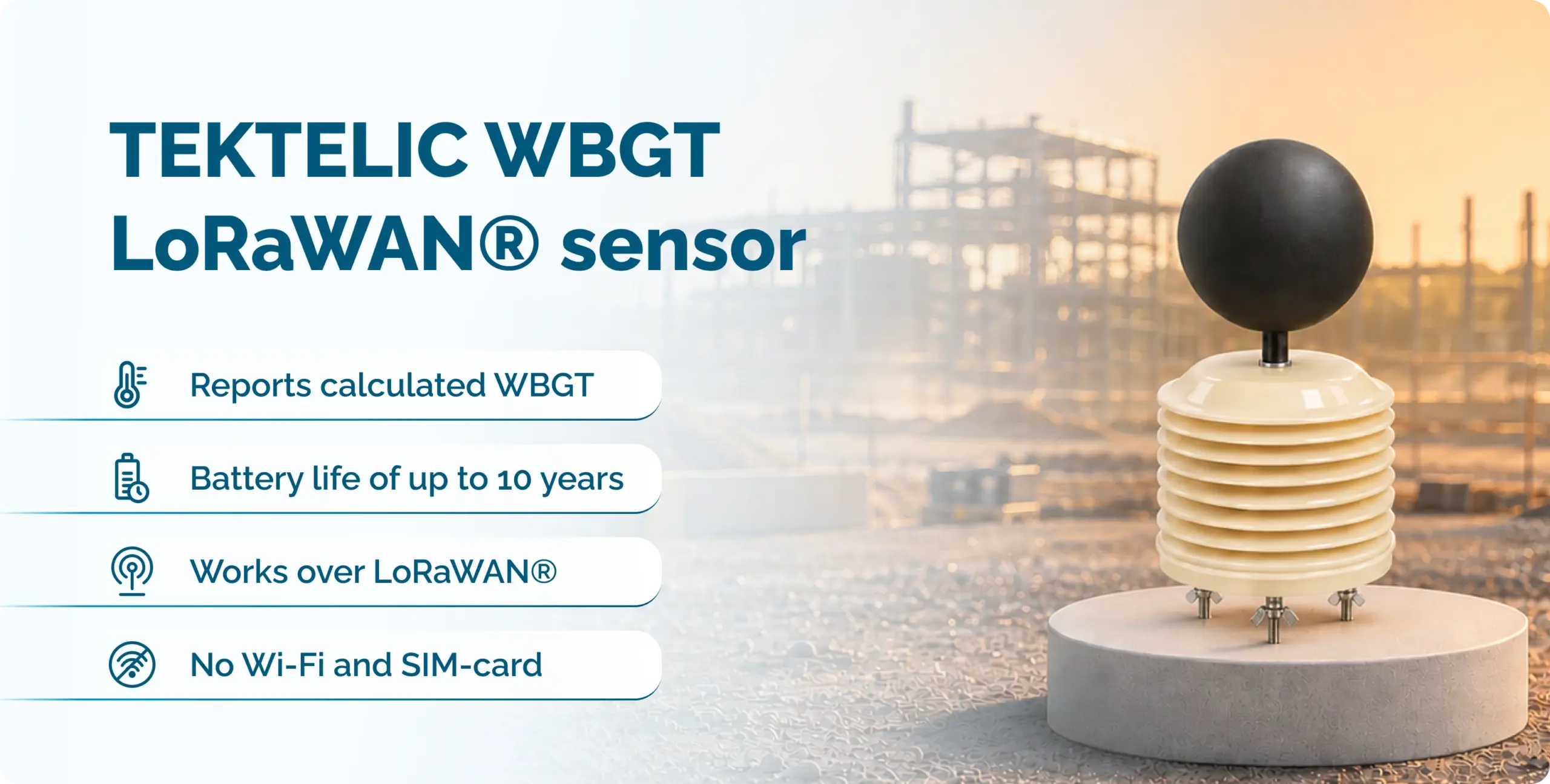
TEKTELIC's WBGT LoRaWAN® sensor turns heat stress from a regional estimate into a local, continuously updated reading. It reports calculated WBGT from the places where people are exposed and delivers that data to the teams who decide when to act.
Local readings where the risk is
Conditions can differ sharply within a single site: a shaded rest area and a sunlit sports field may fall into different risk categories. A TEKTELIC sensor at each exposed location shows the conditions people actually face as they change through the day.
Years of reporting with minimal maintenance
The sensor's battery lasts up to 10 years, depending on configuration and operating conditions. Fewer replacement visits make long-term monitoring practical across many dispersed locations, from parks and school grounds to outdoor worksites.
Wireless coverage without Wi-Fi or SIM cards
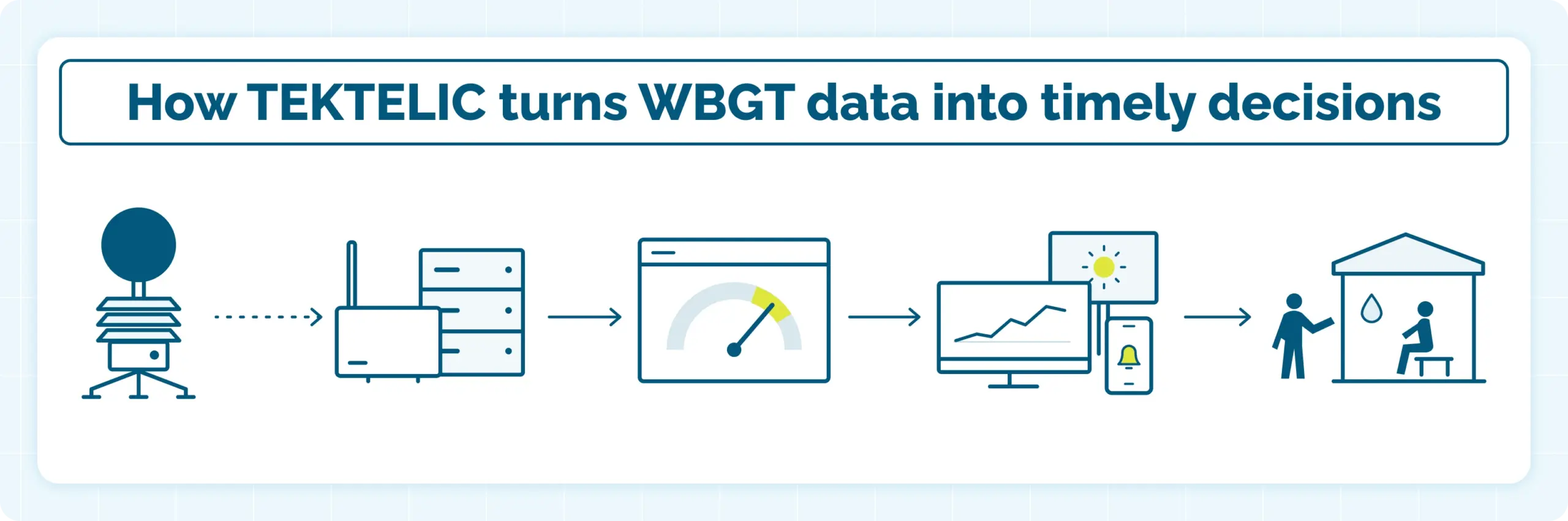
- The sensor sends readings over LoRaWAN to a gateway.
- The gateway forwards the data through a network server.
- The network server passes it to an application that can drive dashboards, public displays and notifications.
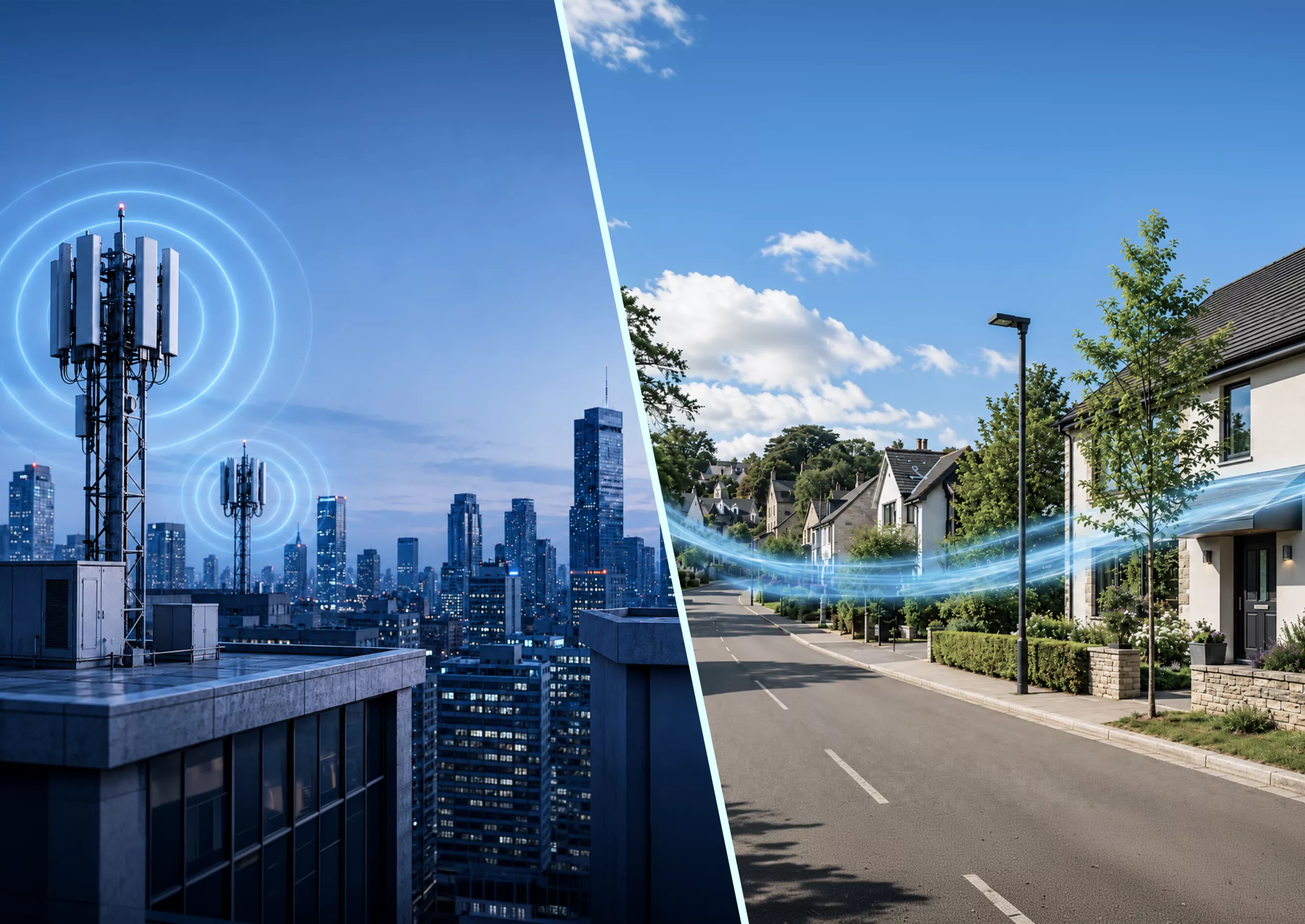
Because each sensor connects over LoRaWAN, none needs its own Wi-Fi connection or SIM card. TEKTELIC also builds LoRaWAN gateways, so the sensor and the network that carries its data can come from one supplier. Dashboards, displays and alerts require a suitably configured application and integration.
From readings to response
TEKTELIC readings are most valuable where someone is ready to act on them:
- Cities and park operators can make heat conditions visible at playgrounds, sports grounds and parks, then open cooling spaces or issue warnings.
- Schools can adjust outdoor lessons, sports and breaks using current readings alongside local guidance.
- Employers and facility operators can feed site data into a heat-management programme that also considers workload, clothing and individual vulnerability.
For example, a school could monitor an exposed playing field and a shaded rest area, display the current risk category and alert staff when to shorten or postpone outdoor activity. Staff see the conditions where the children actually are, instead of guessing from a forecast.
The sensor provides environmental information; protective action comes from the people and organisations using it. It does not measure a person's core temperature or diagnose heatstroke.
Checklist: planning a TEKTELIC WBGT deployment with a response plan
A sensor delivers value only when its readings are linked to clear decisions. Use this checklist when planning a deployment:
- Place sensors where people are exposed, following TEKTELIC's installation instructions.
- Confirm the WBGT calculation method, accuracy, and suitability for the intended environment before using readings for formal compliance decisions.
- Set reporting intervals, thresholds and responsibilities to match the application, so everyone knows who acts and when.
- Write clear public messages that show the location, update time, risk level, and a specific action.
- Keep the basics in place: shade, cooling, drinking water, and an emergency response procedure.
Turn local heat data into earlier action
WBGT reveals the full environmental heat load that a thermometer misses. Continuous monitoring shows how the load changes in the places where people actually play, learn, and work. The most effective deployments pair reliable environmental data with clear public communication and a planned response.
Contact TEKTELIC to define the sensor, connectivity, and application configuration for your site.