Expertise
5 min reading
15 June 2026
15 June 2026
How to Choose an Equipment Tracking Solution


Choosing the wrong equipment tracking solution is an expensive mistake. Equipment goes missing, maintenance gets skipped because no one knows a machine’s location or runtime hours, and operations teams end up managing spreadsheets instead of assets. The cost is real — equipment theft alone costs the U.S. construction industry over $1 billion annually, and that figure doesn’t account for the productivity losses from misplaced tools or unscheduled downtime.
The good news is that the technology for tracking equipment has matured significantly. The challenge now isn’t whether tracking is possible — it’s picking the right approach for your environment, your scale, and your operational priorities.
This guide walks through the main tracking technologies, the criteria that actually matter when evaluating solutions, and a practical framework for making the right choice for your business.
What is equipment tracking (and why it matters)?
Equipment tracking means using a combination of hardware (sensors, tags, or GPS devices) and software to monitor the location, status, and utilization of physical assets in near real-time. The hardware reports data through a wireless sensor network; the software turns that data into something actionable — a map, an alert, a utilization report.
The business problems it addresses are straightforward:
- Theft prevention. If a piece of equipment leaves a defined boundary, you know within minutes.
- Utilization optimization. Tracking which machines are idle, overused, or scheduled for maintenance prevents both underuse and premature failure.
- Maintenance scheduling. Some systems report engine hours or vibration data, enabling condition-based maintenance rather than calendar-based.
- Compliance and audits. Healthcare and regulated industries often require demonstrable records of equipment location and calibration status.
Equipment tracking applies at almost any scale — from a contractor tracking 10 power tools to a logistics operator managing 10,000 pallets across multiple warehouses. The right solution looks very different at each end of that spectrum, which is exactly why choosing based on your actual requirements matters more than picking the most capable technology on the market.
Types of equipment tracking technologies
Before getting into selection criteria, it helps to understand what’s actually available. Each technology involves real trade-offs across range, power consumption, accuracy, and cost. For a deeper technical breakdown, see our asset tracking technology deep-dive.
GPS / GNSS
GPS trackers use satellite signals to determine location with high precision, anywhere outdoors. They’re the natural fit for vehicles, construction equipment, and high-value outdoor assets that move across large areas.
GNSS (Global Navigation Satellite System) is the broader term covering all satellite positioning systems—including GPS (US), GLONASS (Russia), Galileo (EU), and BeiDou (China). By drawing on multiple satellite constellations at once, GNSS receivers achieve the highest accuracy, typically 1–2 meters, and stay reliable even in challenging environments like urban canyons or dense tree cover where a single system might struggle.
The trade-off is power consumption. GPS/GNSS chips are energy-hungry, which means either frequent battery changes or wired connections to a vehicle’s power supply. Battery-only trackers tend to report infrequently to conserve power, limiting real-time visibility.
RFID
RFID tags are inexpensive and passive — they carry no battery and respond when scanned by a reader. This makes them practical for high-volume inventory applications like warehouse bin tracking or tool check-in/check-out systems.
The limitation is range. Passive RFID requires an active scan (someone walking past with a reader), meaning you get location data at scan points, not continuous tracking. Active RFID extends the range but adds cost and battery management.
Bluetooth Low Energy (BLE)
BLE beacons are compact, long-lasting on battery, and work well in dense indoor environments. Hospitals use them to locate infusion pumps and portable diagnostic equipment within a floor or room.
Range is the constraint — typically under 100 meters — and accuracy depends heavily on beacon density. BLE is excellent for indoor asset management but doesn’t scale to large outdoor areas.
LoRaWAN
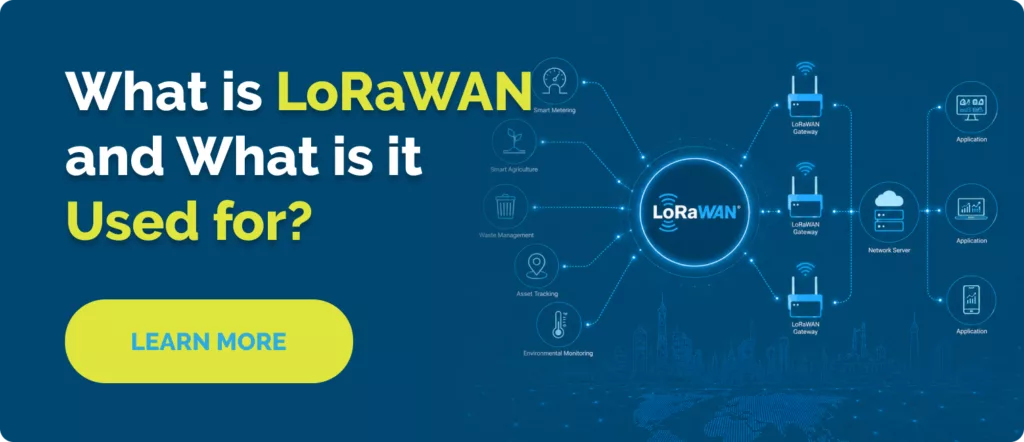
LoRaWAN (Long Range Wide Area Network) is a radio protocol designed specifically for IoT applications. It operates in unlicensed spectrum, consumes very little power, and covers distances of 2–15 km from a single gateway — more in open terrain.
For equipment tracking, LoRaWAN’s advantages are significant: a single gateway can cover an entire industrial campus or construction site, battery life on trackers can reach 5–10 years with event-based reporting, and the standard is open (devices from any vendor work on any LoRaWAN network). It’s become a dominant choice for industrial and construction environments precisely because it balances coverage, power efficiency, and deployment cost better than the alternatives at scale.
Cellular (LTE-M / NB-IoT)
Cellular-connected trackers use existing carrier infrastructure, which means zero gateway deployment — devices just connect to the network. That’s useful for assets that move across wide geographic areas where private infrastructure isn’t practical.
The recurring cost per device (SIM fees) and higher power consumption compared to LoRaWAN are the main trade-offs. For a small fleet of high-value mobile assets, cellular makes sense. For hundreds or thousands of devices on a fixed site, the economics favor LoRaWAN.
Technology comparison
| Technology | Range | Battery Life | Indoor Performance | Outdoor Performance | Best Fit |
| GPS / GNSS | Global | Weeks–months | Poor | Excellent | Vehicles, high-value outdoor assets |
| RFID | <10 m | Passive = no battery | Good | Limited | Warehouse inventory, tool check-out |
| BLE | <100 m | Months–years | Excellent | Limited | Hospital equipment, indoor tools |
| LoRaWAN | 2–15 km | Years | Good | Excellent | Industrial, construction, campus-wide |
| Cellular (LTE-M/NB-IoT) | Nationwide | Months | Good | Excellent | Remote assets, mobile fleets |
7 key criteria for choosing an equipment tracking solution
Comparing technologies in the abstract is useful, but the decision ultimately comes down to how well a solution fits your operational reality. These seven criteria are the ones that most reliably determine whether a deployment succeeds or becomes an expensive shelf item.
-
Coverage environment: Indoor, outdoor, or mixed?
This is the first question to answer because it directly determines which technologies are viable. GPS works outdoors but fails inside buildings. BLE works well indoors but not across a large yard. LoRaWAN handles both reasonably well with the right configuration, especially when combined with GNSS for outdoor precision.
Ask where your equipment spends most of its time. If the answer is “it moves between a warehouse floor and a loading dock,” you need a solution that handles both environments — ideally a single tracker with multi-technology capability rather than two separate systems. For deployments that are primarily indoor, see our guide to indoor asset tracking technologies.
-
Battery life and power requirements
This criterion is often underestimated at the evaluation stage. A tracker that requires a battery change every three months sounds manageable until you’re managing 300 devices across a large facility.
Unpowered equipment — hand tools, portable generators, construction attachments — needs years of battery life, not months. This rules out GPS-only trackers for most non-vehicle applications. LoRaWAN trackers with event-based reporting (transmitting only when movement is detected rather than on a fixed schedule) can extend battery life to 5–10 years on a single charge.
Powered equipment is more flexible. Machines with available 12V or 24V connections can support wired trackers that provide richer data — engine hours, fuel consumption, ignition state — without any battery constraints.
-
Location accuracy requirements
“Where is it?” means different things in different contexts. A hospital needing to find a specific infusion pump on a specific floor needs room-level accuracy. A construction manager confirming that an excavator hasn’t left the job site needs zone-level accuracy. Neither requires GPS-grade sub-meter precision.
Over-specifying accuracy increases cost significantly. Understand what decisions you’re making with location data, and match the accuracy requirement to that decision — not to the most impressive spec on a data sheet.
-
Scale and deployment cost
The economics of equipment tracking change dramatically with scale. Consider both per-device cost and infrastructure cost.
With cellular trackers, there’s no infrastructure to deploy — but each device carries a monthly SIM fee. At 50 devices, this is manageable. At 500 devices, it becomes a significant ongoing cost.
With LoRaWAN, one gateway can cover a large facility or job site. The per-device cost is low, and there are no recurring connectivity fees beyond the network server (which can be self-hosted or cloud-based). The economics improve with scale, making it the more cost-effective choice for large deployments.
RFID has the lowest per-tag cost but requires fixed reader infrastructure at every point where location capture is needed. Factor in that labor cost.
-
Environmental conditions
Equipment tracking hardware lives in conditions that consumer electronics don’t survive. Construction sites involve mud, vibration, and temperature extremes. Cold-chain logistics means sub-zero environments. Heavy manufacturing involves oils, dust, and moisture.
IP ratings tell you a device’s resistance to dust and water (IP67 means dust-tight and submersible to 1 meter for 30 minutes; IP68 is rated for continuous immersion). For outdoor industrial use, IP67 is typically the minimum acceptable standard. Don’t overlook operating temperature ranges — a tracker rated for 0–40°C will fail in a Canadian winter.
-
Integration with existing systems
A tracker that reports location to a siloed dashboard no one checks creates work rather than reducing it. Before evaluating hardware, map out where the data needs to go.
Does your ERP need to know when equipment is checked out? Does your maintenance platform need to trigger work orders based on runtime hours? Does your operations team use a specific asset management system?
LoRaWAN is an open standard, which means devices work with any compatible network server and most enterprise IoT platforms. Proprietary protocols lock you into a vendor’s ecosystem — sometimes that’s fine, but it limits future flexibility and can make integration expensive.
Check for open APIs, webhook support, and compatibility with platforms your team already uses before committing to hardware.
-
Total cost of ownership (TCO)
Purchase price is rarely the most useful number to compare. For a more accurate picture, calculate:
- Hardware cost per device × number of devices
- Infrastructure cost (gateways, network server, installation)
- Connectivity cost per device per year (SIM fees, network access fees)
- Software/platform cost per year
- Maintenance cost (battery replacement, hardware repair, firmware updates)
A LoRaWAN deployment has moderate upfront hardware cost, low-to-zero ongoing connectivity cost, and minimal maintenance overhead if the hardware is well-rated. Cellular deployments have lower upfront cost but higher ongoing connectivity cost that compounds over time. RFID has low tag cost but high labor cost for anything requiring active scanning.
Build a 3-year TCO model rather than comparing first-year costs.
Which industries benefit most from IoT equipment tracking?
Construction
Job sites are dynamic environments — equipment moves between locations, gets shared across crews, and is vulnerable to theft outside working hours. Tracking excavators, lifts, generators, and tools across a site prevents both loss and unnecessary rental expenditures when owned equipment is sitting idle nearby. Equipment theft costs the U.S. construction industry over $1 billion annually, with recovery rates below 25%.
Healthcare
Clinical equipment — infusion pumps, portable ultrasound devices, wheelchairs, ventilators — is routinely misplaced across large hospital campuses. Nurses report spending 20–30 minutes per shift searching for equipment. BLE-based indoor tracking with room-level accuracy addresses this directly, improving both staff productivity and patient care.
See a detailed breakdown of hospital equipment tracking and how TEKTELIC approaches healthcare IoT deployments.
Manufacturing
Production environments benefit from utilization data as much as location data. Knowing that a specific piece of tooling is idle 60% of the time, or that a mobile work platform spends two hours per shift waiting while workers retrieve it, drives layout and scheduling improvements that GPS alone can’t provide.
For more on industrial IoT applications and TEKTELIC’s industrial deployments, see the linked resources.
Logistics and warehousing
Forklifts, dollies, pallet jacks, and loading equipment circulate constantly through distribution centers. Zone-level indoor tracking prevents bottlenecks, supports utilization analysis, and speeds up equipment maintenance scheduling based on actual usage rather than calendar intervals.
What does a LoRaWAN equipment tracking system look like in practice?
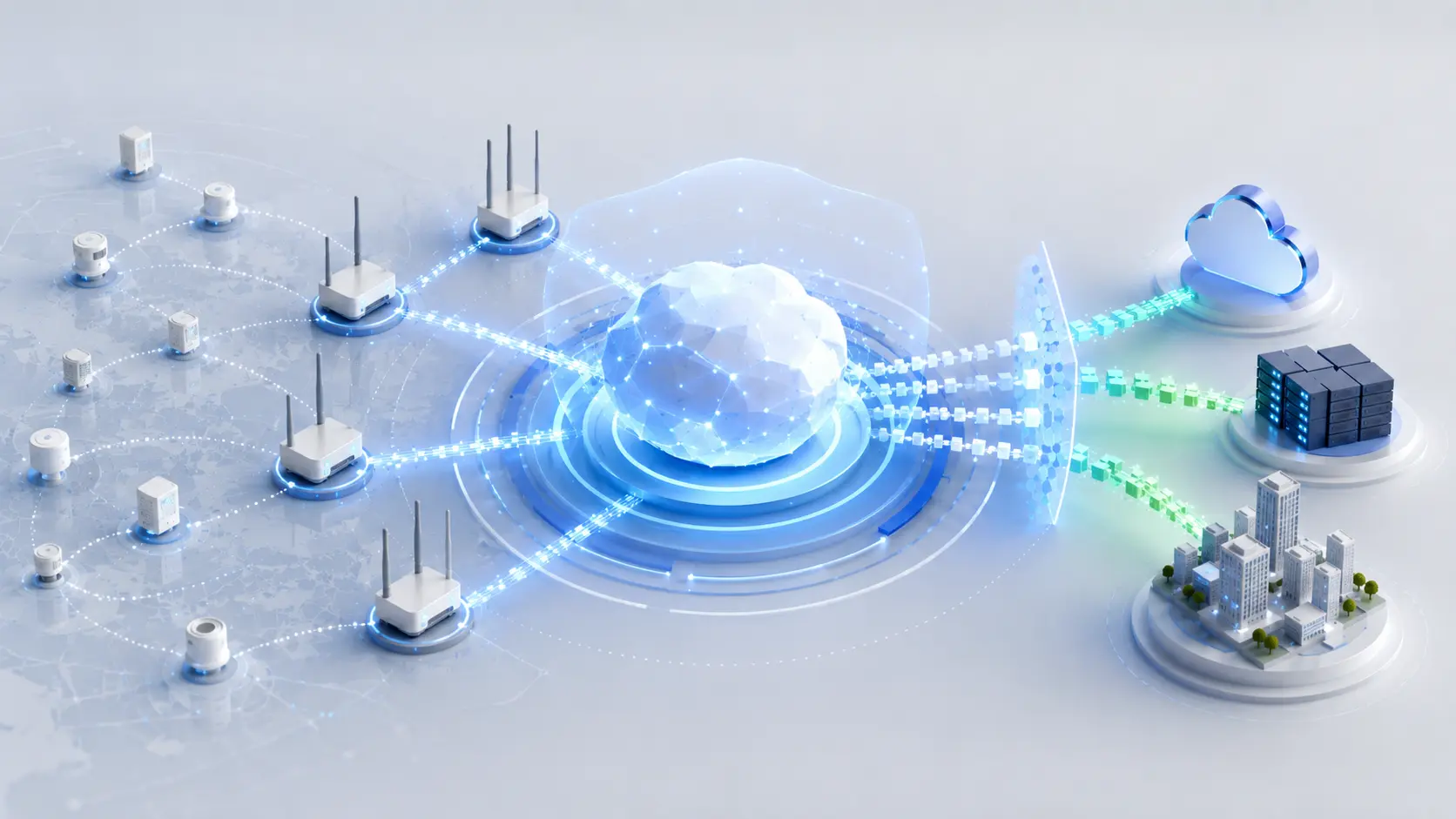
A complete LoRaWAN equipment tracking deployment has four layers:
- Tracker/end device. Attached to each piece of equipment. Reports location (via GNSS or LoRaWAN geolocation), motion events, and optionally additional sensor data (temperature, vibration, shock).
- LoRaWAN gateway. Receives transmissions from devices within range and forwards data to the network server. One gateway typically covers a large facility or outdoor area. Multiple gateways overlap for redundancy.
- Network server. Manages device registration, decodes LoRaWAN packets, and routes data to the application layer. Can be self-hosted or cloud-based.
- Application platform/dashboard. Where the data becomes visible — maps, utilization reports, geofence alerts, maintenance triggers. This is the layer that integrates with ERP or CMMS systems via API.

A practical example: a manufacturing plant deploys 200 trackers on mobile equipment across a 50,000 sq ft facility. Two indoor gateways provide redundant coverage. Each tracker reports its status when motion is detected (event-based) and checks in once per hour when stationary. Battery life: 7+ years. Total gateway infrastructure: two wall-mounted units, installed in half a day. The platform sends maintenance alerts when equipment reaches defined runtime thresholds, and geofence alerts when equipment exits designated zones during off-hours.
The deployment simplicity is one of LoRaWAN’s underappreciated advantages – there’s no cellular contract per device, no complex WiFi integration, and no reliance on infrastructure that workers’ mobile devices or other systems are competing for. For a deeper look at how LoRaWAN handles asset tracking specifically, see our LoRaWAN asset tracking guide.
How to evaluate equipment tracking vendors
When comparing vendors, the product spec sheet tells you part of the story. These questions fill in the rest:
- Device portfolio
Does the vendor offer a range suited to different asset types — battery-powered outdoor trackers, wired vehicle trackers, compact indoor tags? A vendor with one product often requires workarounds that create operational complexity.
- Network compatibility
If the devices use LoRaWAN, do they work with any LoRaWAN network server, or only the vendor’s own? Open compatibility gives you flexibility as your infrastructure evolves; proprietary protocols create dependency.
- Firmware and remote management
Can devices be updated over the air? Can reporting intervals be adjusted remotely without a site visit? For large deployments, this matters more than it appears at evaluation time.
- Certifications
FCC, CE, RoHS, and REACH certifications indicate the device has passed formal testing. IP ratings for environmental resistance should be verified against the spec sheet, not assumed from marketing copy.
- Track record
Reference customers, published case studies, and deployment scale are better indicators than claimed capabilities. Ask specifically about deployments similar in scale and environment to yours.
TEKTELIC equipment tracking solutions
TEKTELIC offers a complete, end-to-end LoRaWAN solution for asset tracking rather than a single device—spanning trackers, gateways, the network server, and a visualization application, all built for industrial and enterprise environments with open APIs and no proprietary lock-in.
On the device side, the tracker portfolio covers the full range of use cases this vertical demands:
- ORCA is a rugged, IP67 GPS/GNSS tracker for outdoor field assets that move across large areas—shipping containers, pallets, railcars, fleet vehicles, and heavy equipment—delivering near real-time satellite location over LoRaWAN. Event-based startup makes it a cost-effective choice for unpowered assets.
- PELICAN and PELICAN Ex are IP67 outdoor trackers combining LoRaWAN and BLE for logistics, manufacturing, and construction. The PELICAN Ex adds ATEX Zone 1/21 certification for hazardous environments like oil, gas, and mining sites where explosive atmospheres may be present.
- SPARROW combines LoRaWAN and BLE for indoor tracking in challenging RF environments such as hospitals and warehouses. It can act as a tracker or as a beacon that positions other assets, and onboards in seconds with no technical expertise.
- STORK is a rugged, long-life tracker with LoRaWAN connectivity plus GNSS, Wi-Fi, and BLE scanning for accurate indoor and outdoor positioning—well suited to mixed-environment fleets.

Adaptive, event-based tracking across all TEKTELIC devices switches the reporting rate to react to movement, extending battery life well beyond typical GPS trackers and keeping unpowered construction and field assets practical to deploy.
The KONA Enterprise Gateway provides the indoor and outdoor coverage layer for private LoRaWAN networks, enterprise-grade hardware built for continuous operation in demanding conditions. Above the network, the LOCUS application handles asset visualization and management, while open APIs allow integration with any standard LoRaWAN network server or third-party IoT platform.
Key takeaways
When evaluating equipment tracking solutions, the decision comes down to seven practical criteria:
- Coverage environment — where your equipment operates, determines which technologies are viable
- Battery life — unpowered equipment demands multi-year battery life; event-based reporting is key
- Location accuracy — match accuracy requirements to actual decision needs, not maximum capability
- Scale and deployment cost — evaluate infrastructure cost alongside per-device cost
- Environmental ruggedness — IP67 or higher for outdoor/industrial use; verify temperature ranges
- Integration — open standards and APIs prevent vendor lock-in and simplify platform integration
- Total cost of ownership — calculate 3-year TCO including connectivity and maintenance, not just hardware
LoRaWAN-based solutions tend to outperform on criteria 2, 4, 6, and 7 for industrial and construction deployments at scale. GPS cellular remains the better choice for mobile assets that travel across wide geographic areas. BLE is the right tool for dense indoor environments with sub-room accuracy requirements.
No single technology is best in all contexts — which is why defining your requirements before evaluating solutions is more valuable than any feature comparison.