Expertise
3 min reading
11 April 2023
11 April 2023
How can IoT Help Optimize your Workspace?

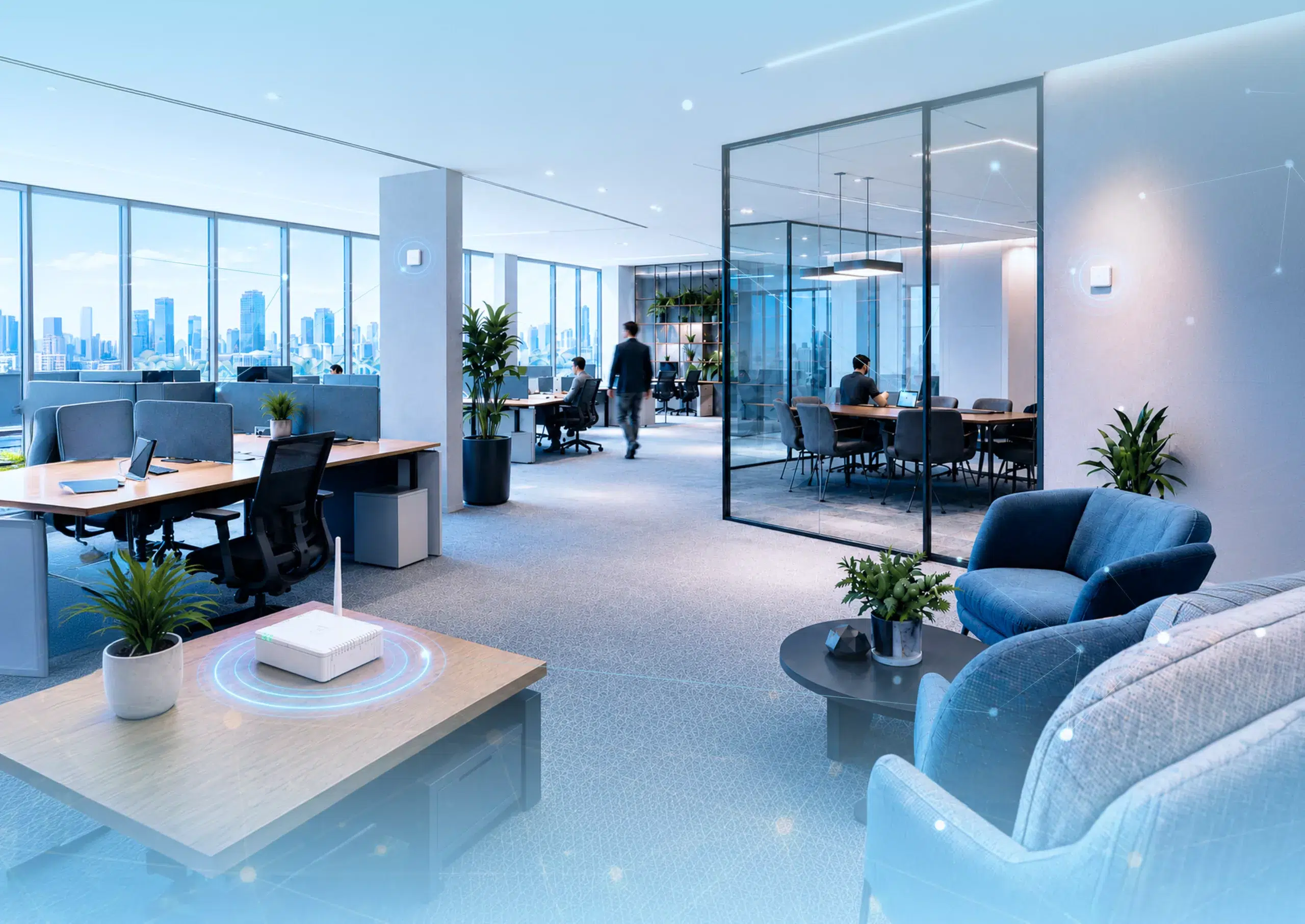
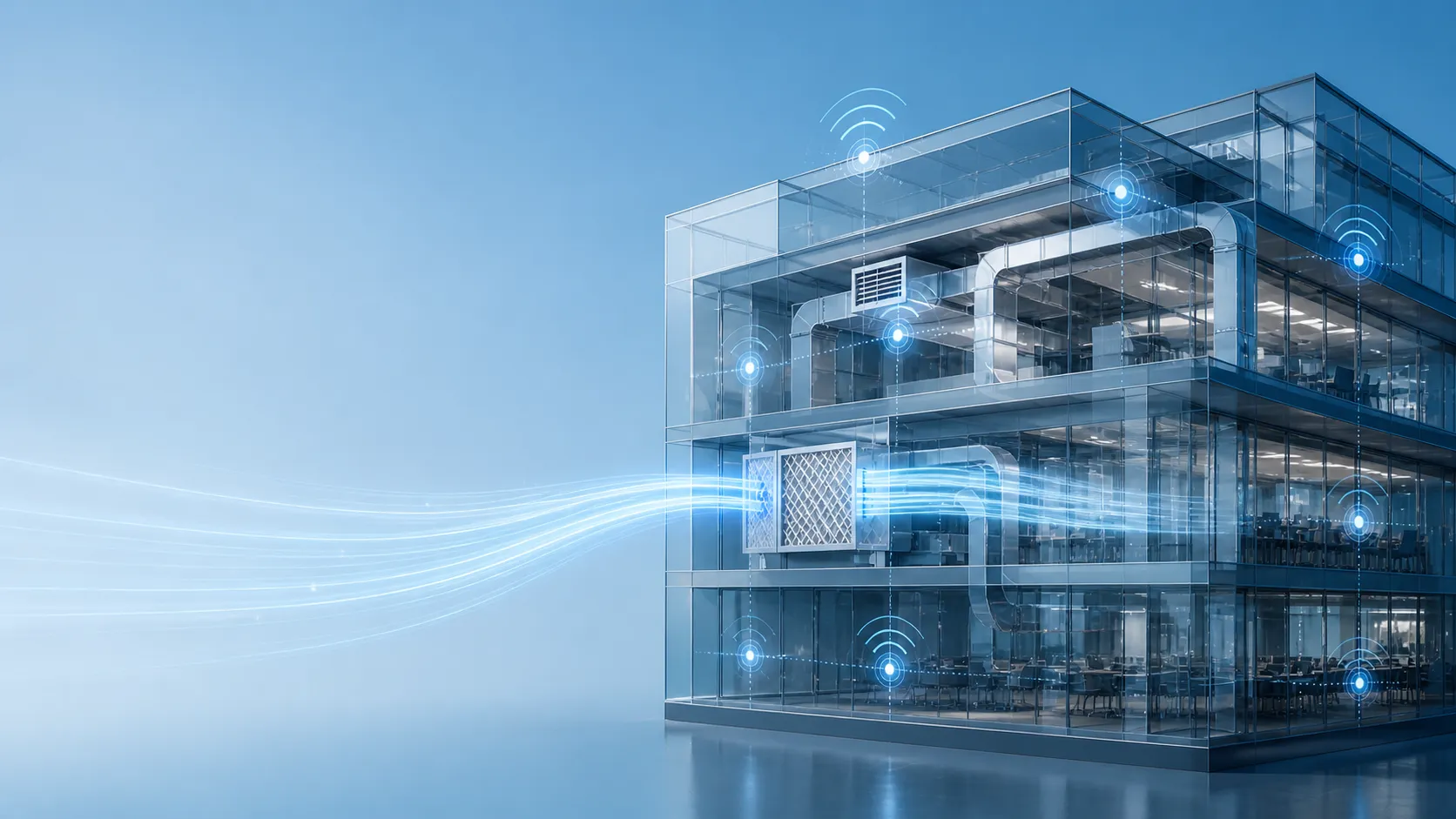
The Internet of Things (IoT) helps companies optimize their workspaces by turning the office into a source of real-time data: which desks and rooms are occupied, whether the air is fresh enough to think clearly, whether the lights and HVAC are running in empty rooms.
Facility managers use this data to cut energy costs by 5–30%, right-size their real estate, and create a healthier, more comfortable environment for employees. It’s a fast-growing practice: the global smart office market is valued at roughly $58.7 billion in 2025 and is projected to nearly double to $111 billion by 2030.
Below, we expand on each benefit in detail and explain how to make a workspace more functional with IoT technology.
How to Manage Office Space?
Workplaces cost companies millions of dollars per year to operate. That includes:
- rent
- utilities
- insurance
- coffee and snacks
- cleaning services, and more.
And much of that spend is wasted on space nobody is using. According to CBRE’s 2025 Americas Occupier Sentiment Survey, 66% of organizations report that their office space is less than 60% utilized on an average day — yet 73% say their offices are effectively at capacity on peak attendance days.
Hybrid work has made demand for space uneven and unpredictable, which is exactly the problem real-time occupancy data solves. Companies that implement proper occupancy tracking reduce real estate costs by an average of 35% within 18 months, according to CBRE’s Workplace Intelligence research.
That’s why it’s important to use the right tools for managing the workplace and approach it as an ecosystem, where each component matters. To effectively manage an office and turn it into a smart workspace, you need to consider:
- Integration of advanced technology
- Human resources management
- Creation of the comfortable environment
- Building of the company culture.
The Role of IoT Technologies in Workspace Environment
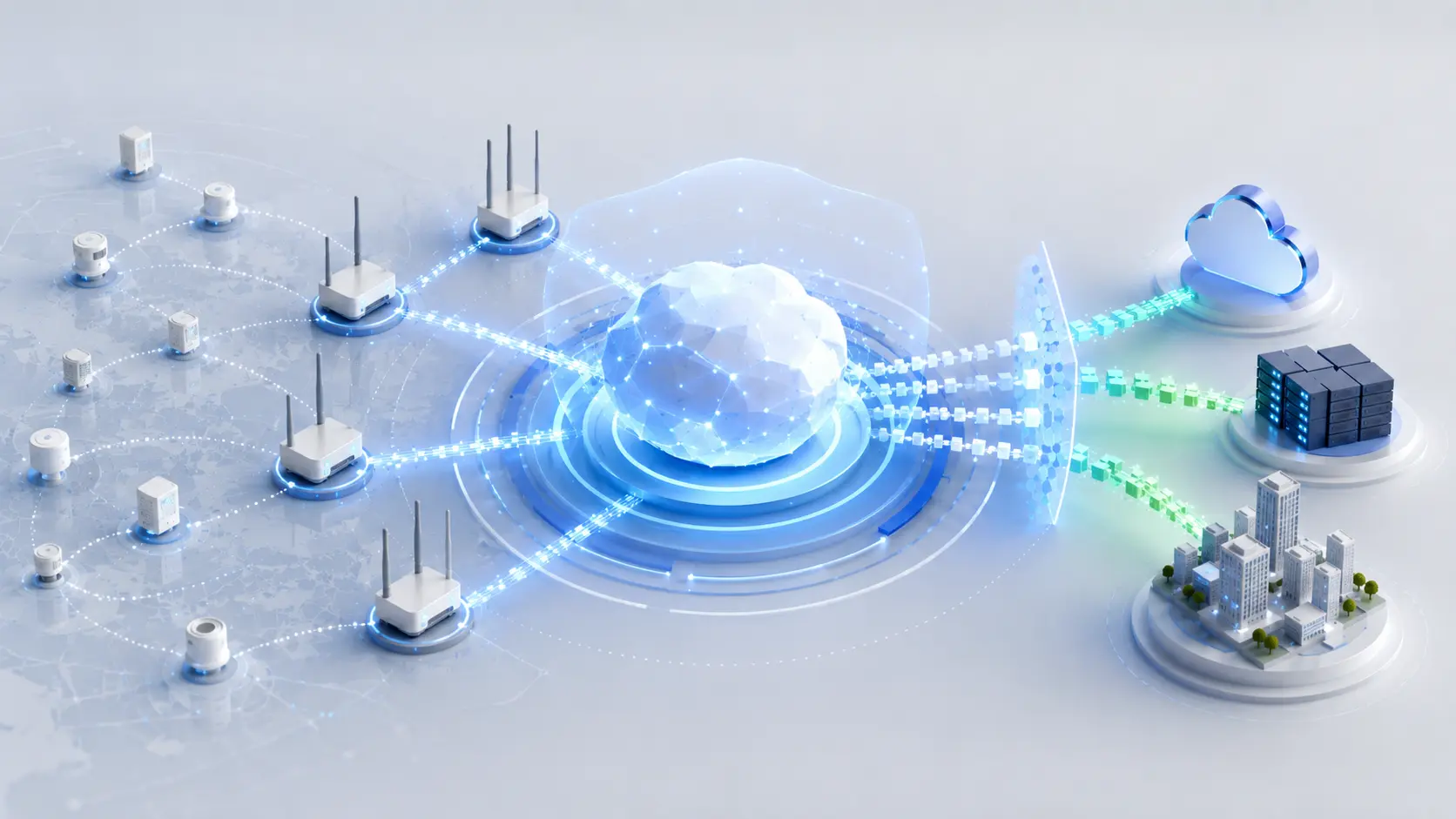
The Internet of Things is a network of internet-connected objects capable of collecting and exchanging data coming from embedded sensors. Devices included in the Internet of Things are connected to the network and can be tracked and controlled remotely.
IoT technologies can help create a more comfortable and healthier environment for employees while also reducing expenses. The stakes are significant: according to the International Energy Agency, building operations account for about 30% of global final energy consumption and 26% of global energy-related emissions, and in developed countries, buildings consume between 20% and 40% of total energy.
Within a building, HVAC is the single largest energy end use, typically around 40–50% of a commercial building’s consumption. Meanwhile, people spend approximately 90% of their time indoors, so the quality of that indoor environment directly affects health and productivity.
IoT sensors, in turn, can be used to collect data on:
- Temperature
- Humidity
- CO2 level
- Occupancy/vacancy level, and other parameters.
This data can be analyzed to improve workplace management and increase employee satisfaction.
LoRaWAN Usage in Smart Building IoT
IoT devices can operate based on different protocols and networks such as LoRa, Wi-Fi, Sig-Fox, Bluetooth, and many others.
LoRa is a radio frequency (RF) telecommunications technology used by Low-Power, Wide-Area Network (LPWAN) devices. It was developed to create wireless networks suited for devices that require low power consumption and long-range transmission capabilities.
LoRaWAN, in turn, is a communication protocol and system architecture for a data network based on LoRa. LoRaWAN has many benefits over the other technologies present on the market, including:
- ISM band/License-free frequency band
- Low power
- Long Range
- Low Cost

These are the main reasons why TEKTELIC has chosen this particular technology for operation and as the base connectivity option for our gateways and devices.
Read also: What is LoRaWAN?
What Workplace Data Can You Collect?
IoT sensors can collect different types of data, depending on the purpose of a sensor and monitoring needs.
Lighting
Lighting in the workspace has a significant impact on worker motivation, productivity, and health. Whether you choose natural or artificial light, optimal lighting can help boost the performance of your employees and the business of your company. The right lighting can also improve employee mood and reduce glare and computer screen strain.
Sometimes, some lights go out of service unnoticed, which leads to a lack of lighting, creating an uncomfortable working setting, influencing employee productivity level, and reducing creativity.
To address this problem and keep the workspace optimal for the employees, TEKTELIC has designed COMFORT V2, a sensor that monitors lighting (on/off), temperature, and humidity, and has leak detection capability. It is a small-sized device, so it can be easily deployed in any office space for monitoring the ambient environment. Besides, COMFORT V2 has an extensive battery life of up to 10 years, which makes it a long-term investment in the smart office space.
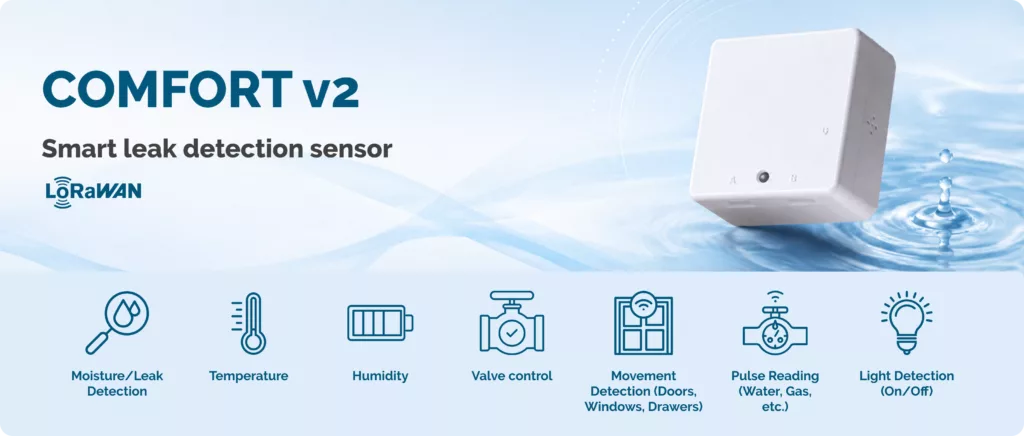
Besides, TEKTELIC already has a successful use case of deploying COMFORT for monitoring office environments in the United Kingdom. The main issue was to gain access to remote monitoring of building conditions and be able to adjust them accordingly when needed. With TEKTELIC COMFORT and the goldeni platform, facility managers are aware of office space density in real time and can optimize energy consumption and ensure proper lighting levels for the maximum efficiency of the workers.
Air Quality
Indoor air quality is a parameter that often goes overlooked, but employees need to breathe fresh air free of harmful particles or contaminants. For instance, according to the research made in course of the Global CogFx study, high levels of CO2 can affect their performance in a variety of ways, including headaches, fatigue, and trouble concentrating. According to a study led by a team of Harvard researchers, cognitive ability scores declined by 15% at 950 ppm and 50% at 1,400 ppm. When the CO2 level goes up, office workers are likely to find it hard to focus, understand information, and make decisions. That’s why companies need to monitor air quality and adjust ventilation/HVAC systems accordingly.
Obviously, there are many things you can do to improve the air quality in your workspace even without sensors. For example, keeping your office clean and removing all debris can help keep pollutants out. You should also be sure to regularly vacuum your carpet to prevent dust mites, molds, and other pollutants from being circulated through the air. However, without knowing precise measurements, it’s hard to schedule cleaning and/or ventilation properly. That’s why it will be beneficial to install air quality monitors in communal spaces to make adjustments in the HVAC system as needed and ensure your workspace is healthy for your employees.
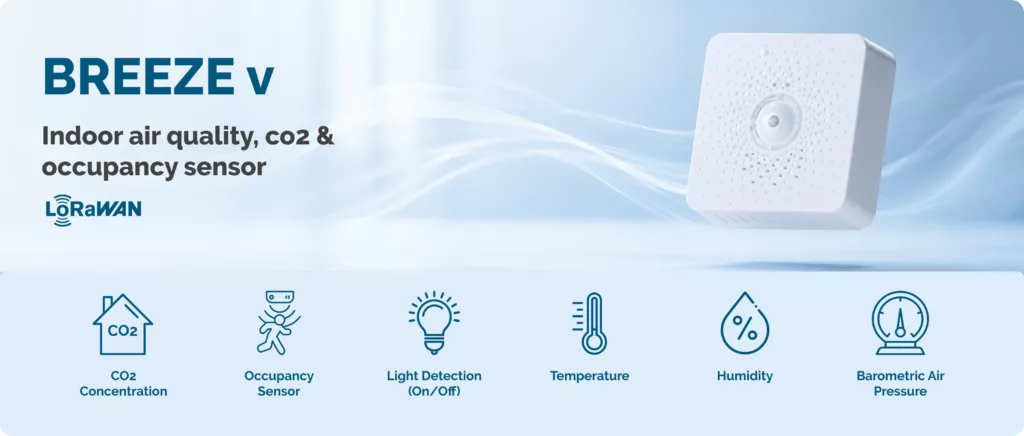
TEKTELIC offersIt comes in many kits. For example, Breeze D consists of the BREEZE sensor and an E-Ink display, which visualizes the measurements and updates every minute (by default) or every other time indicated time period. BREEZE monitors CO2 level, humidity, and temperature, which are the 3 most important parameters for the indoor environment. The sensor has wall, ceiling, and table mount configurations, so it can be placed in meeting rooms, kitchens, and any other office spaces. The E-Ink display tablet, in turn, can be mounted on a table or wall and is completely wireless.
CO2 tells you how well a room is ventilated. It doesn’t tell you what is actually floating in the air people breathe. Printer and copier toner, dust stirred up by cleaning, cooking particles drifting from the office kitchen, construction work on the floor above, and outdoor pollution pulled in through the ventilation system all release fine particles that no CO2 sensor will ever register.
These particles matter because of their size. PM10 is largely filtered by the nose and throat, but PM2.5 and PM1 travel deep into the lungs and can enter the bloodstream. In an office context, elevated fine particulate levels show up as the complaints facility teams hear constantly and rarely connect to air quality: irritated eyes, headaches by mid-afternoon, a dry throat, allergy symptoms that get worse at work and better at home.
The difficulty is that particulate spikes are invisible and short-lived. A cleaning crew, a nearby renovation, or a smoky day outside can push levels up for a few hours and then let them fall back. Without continuous measurement, nobody knows the spike happened, and there is no way to link it to a cause or to change anything about the ventilation schedule.
TEKTELIC developed AERIS to close this gap. It continuously measures PM1, PM2.5, and PM10 alongside temperature, humidity, ambient light, and barometric pressure, giving facility teams a complete picture of indoor conditions rather than a single ventilation proxy. With that data, you can see which floors and rooms have a real particulate problem, schedule cleaning and filter replacement based on measurements instead of a fixed calendar, and verify that a change to the HVAC settings actually improved things.
Because AERIS is battery-powered and runs on LoRaWAN®, it needs no wiring and no dedicated infrastructure. Hundreds of units can go up across a building or campus in a single deployment and feed straight into an existing building management platform. The 7+ year battery life keeps maintenance visits, and the operating cost that comes with them, close to zero.
Where BREEZE answers “is this room ventilated enough?”, AERIS answers “is the air in this room clean?” Used together, they cover both halves of indoor air quality, which is why many deployments pair the two: BREEZE in meeting rooms and shared spaces for occupancy-driven ventilation, AERIS in open-plan floors, print rooms, kitchens, and anywhere near an outdoor air intake.
Temperature and thermal comfort
Temperature is the single most common complaint in any office, and it is also the one that costs the most money to get wrong. Overheating and overcooling waste energy on a scale nothing else in the building matches, while the resulting discomfort quietly drains productivity: people who are too cold or too hot lose concentration, take more breaks, and bring in personal heaters and fans that push consumption higher still.
The underlying problem is that most offices are controlled far too coarsely. A single thermostat governs an entire floor, while the corner meeting room bakes in afternoon sun and the space near the entrance stays cold all winter. Weekend and overnight schedules drift out of date. Someone switches a unit to manual in July and it stays that way until December. Facility teams typically only learn about any of this when a complaint reaches them.
Monitoring alone won’t fix this. Knowing that a room is at 26°C is useful; being able to do something about it from a central dashboard is what actually changes the outcome.
HARMONY is TEKTELIC’s LoRaWAN® smart thermostat, and it closes the loop between sensing and control. It monitors ambient temperature, humidity, CO2, and light, and it drives the HVAC directly — with support for 2-pipe and 4-pipe fan coil systems, multi-speed fans, and ECM fan control (0–10V). AUTO and ECO modes remove the reliance on manual switching that causes so much of the inconsistency, and a 3.5″ icon-based LCD makes the interface readable for occupants regardless of the language they speak.
What makes HARMONY particularly useful in a connected office is that it accepts input from external sensors. Occupancy, door and window status, leak detection, and air quality readings can all feed into its control logic, so climate control responds to how a space is actually being used rather than to a fixed schedule. A meeting room that VIVID reports as empty can drop into an energy-saving state and return to comfort settings the moment someone walks in. A window left open can stop the fan coil from fighting the outdoors.
For facility teams managing more than a handful of rooms, HARMONY integrates with BACnet and Modbus BMS environments through cloud platforms and APIs, so schedules, setpoints, and modes can be managed remotely from tools already in use. Firmware Updates Over-the-Air (FUOTA) mean the fleet can be maintained at scale without anyone visiting a single room.
Noise
A lot of people find noise distracting in the workplace, and that’s why minimizing noise is essential to work success. The best way to minimize the noise in the workplace is to remove loud equipment from areas where employees are working. This includes machines and generators that are used regularly, as well as other tools that create too much noise for workers to work around.
Technology can help address this issue as well. One way is to use a sound masking system that adds consistent, low-level ambient noise (white noise) to the workplace and makes it harder to hear side conversations, which act as distractions for many employees. Another way is to place acoustic wall panels and sound isolation in some of the rooms to make them suitable for calls or focused working.
Occupancy
Occupancy monitoring is another crucial metric for office management, especially with the rising popularity of hybrid work and the demand for space. When there is no real-time data on the available and occupied areas, employees may waste time looking for the available working station or meeting room, which will lead to a decrease in efficiency.
Luckily, there are several ways to monitor occupancy in the workspace. The easiest way is to use sensors that detect motion or heat. These sensors can be placed throughout the modern workplace to provide real-time data on occupancy levels. For instance, TEKTELIC has developed the TEMPO Meeting Room Booking Solution, which solves the problem of room booking and facilities management.
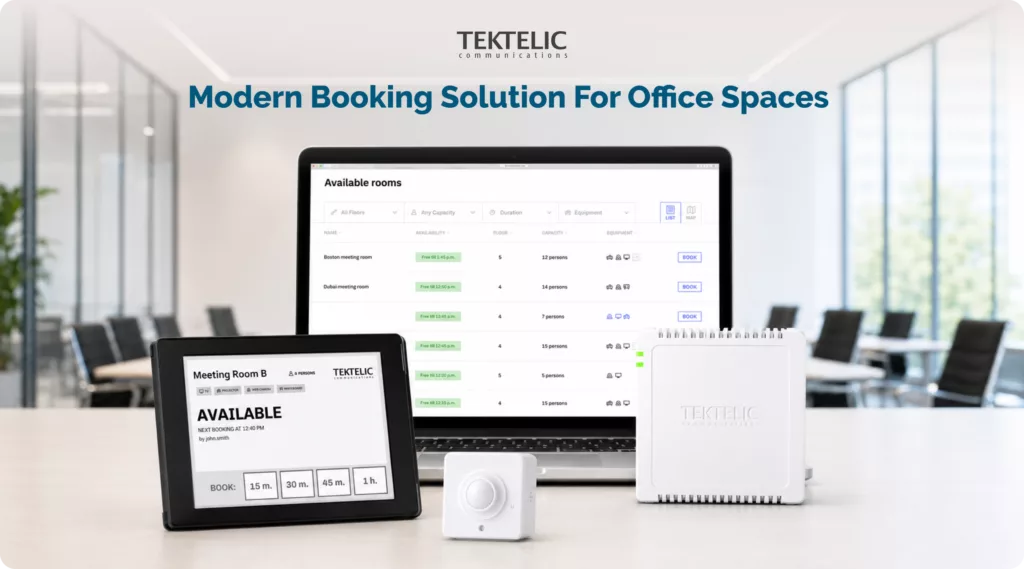
TEMPO solution consists of KONA Micro IoT Gateway, VIVID, and TEMPO Display Tablet. This solution allows you to book a room via Microsoft Outlook or Google Calendar without any additional software and visualize the information on a display tablet, which can be mounted right near the room entrance.
VIVID sensor, in turn, as part of this solution, having the PIR lens detects the motion inside the room and if the place is booked but no motion is detected, it sends an alert to the user and cancels the booking, so someone else can use the space. KONA Micro works as a hub, which ensures communication between the sensor, display, and application.
How to Make a Workspace More Functional?
More businesses and facilities managers are now seeing the benefits of implementing IoT technologies in their office spaces. The result is workplace agility and productive workspaces for employees and a healthier bottom line for commercial real estate owners.
Integrate Stationary and Wearable Devices
IoT solutions in the form of wearables or sensor-enabled appliances are an excellent way to measure how your workspace is being used and optimize its performance. For example, an intelligent room booking system, like the one we’ve already mentioned, is a great way to save time while ensuring your customers are getting the most out of their workspace.
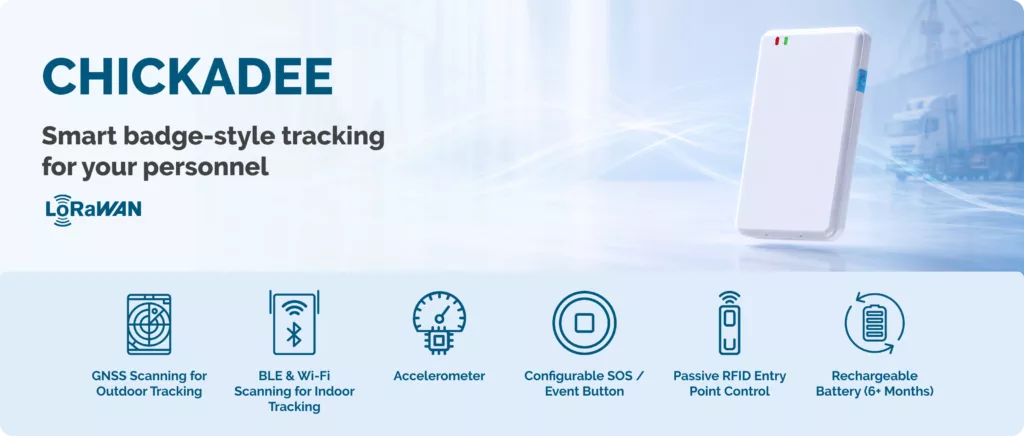
As for the wearables, TEKTELIC’s product range includes CHICKADEE, a compact badge-style tracker designed to locate personnel and assets both indoors and outdoors using LoRaWAN®, GNSS, Wi-Fi, and BLE scanning. It has a ruggedized IP67 design, so it can be used in diverse environments — from construction sites and warehouses to multi-building campuses. The rechargeable battery offers 6+ months of battery life, and a configurable button enables event-based uplinks, allowing personnel to trigger alerts instantly — including an easy-access SOS function for lone worker safety.
Introduce Smart Locks
Employees who work for large firms often forget their keys or electronic cards. So, some team members have to open a room for them or call the reception desk to let them in, which is really inconvenient, and distract company workers from their job. Smart locking, in turn, in conjunction with attendance systems ensures that there can never be such a situation since workers may use the app on their smartphone to come in. Additionally, if a business enterprise needs to monitor the attendance of its employees, this smart lock system will allow business owners to know when the employee entered or left the office.
Integrate Smart Lighting System
Usually, in office space, there are a lot of lamps that consume a lot of energy and become costly for business enterprises. Lightning charges are a critical cost for offices, which have to pay rent in addition to utility fees. Plus, employees often forget to turn off lights while not working, and lamps usually remain active during workweeks, regardless of the necessity.
On the contrary, smart lighting devices are controlled by IoT technologies, which will turn them off automatically to minimize light consumption. Additionally, a smart bulb can connect to employees’ devices and schedules and learn their working process to better adjust brightness and color balance during the day.
Focus on Scalability
At the same time, in order to maximize the efficiency of an IoT implementation, it’s important to pick a solution that has the best fit for your business. It should be scalable enough to accommodate your needs, as well as easy to implement and deploy. It should also provide a variety of data points to help you make the most informed decisions possible.
What are the Benefits of Using IoT for Office Management?
Elevating Employee Health
A facility manager has more responsibilities than simply ensuring a building’s functioning at the best possible level of its productivity. With the use of IoT, managers can also keep track of the health of employees. IoT devices allow business owners to track workers’ heart rates and monitor steps that are taken every day by each one of them, which can be a base for a decision on the need for some activity like a yoga lesson during the lunch break time.
Furthermore, it can be used to manage employees’ work-life balance and create a schedule most comfortable for everyone. People want to work and still have time for some entertainment like table tennis; so IoT solutions can help companies make their work environments more enjoyable and productive. Even stationary CO2 monitors or room monitoring devices can help ensure ergonomics in the office and make a healthy work environment.
Making Business Spaces More Accessible
The information on space accessibility can be really useful for a company to determine which departments need more meeting rooms, and where there are enough of them already. IoT sensors can even help you monitor floor traffic data. For example, TEKTELIC has a successful project of optimizing cleaning routes around the office with KONA Micro Gateway and VIVID sensors that come in two versions.
VIVID v2 is made for desks and walls. It watches a smaller, targeted zone — a single workstation, a doorway, a small office. It uses a thermopile sensor, which detects people by body heat rather than movement. That means it still registers someone sitting perfectly still at their desk, and it does it without a camera, so there’s no privacy concern.
VIVID v3 is made for ceilings. Mounted overhead, it covers a whole room, which suits meeting rooms, open-plan floors, and larger commercial spaces. It uses a PIR sensor to detect motion across that wider area.
| VIVID v2 | VIVID v3 | |
| Best for | Desks, walls, entry points, smaller rooms | Ceilings, meeting rooms, open-plan offices |
| Detects by | Body heat (thermopile) — catches stationary people | Motion (PIR) |
| Coverage | Targeted, 60° × 60° | Wide-area, 86° × 74° |
| Typical use | Desk occupancy, point-of-entry security | Room occupancy, large space utilization |
Both measure temperature, humidity, light, motion/presence, and open/close events in one device, and both share the same IP65 rugged housing, twist-lock mount, and tool-free battery access. Sensitivity is adjustable on both, so you can tune out false triggers, and they only report when something actually changes — which keeps network traffic down and batteries lasting longer.
For the cleaning-route project, that split works well in practice: v3 on the ceilings of meeting rooms and open areas for overall room usage, v2 at desks and entry points where you need to know about one specific spot.
KONA Micro, in this case, acts as a data hub, which transmits data from the device to the platform with detailed floor plans, so cleaners can organize their work without disturbing other employees. KONA Micro IoT Gateway is a unique gateway because of its 4-hour battery backup and it will continue receiving and transmitting data even if the main site is out of power.

Providing and Receiving Real-Time Feedback
With wireless solutions and sensors, employees can receive real-time feedback instantly, which can be useful in a number of ways. The ability to receive instant feedback improves productivity among workers and has a positive impact on their performance, in general.
By adding IoT devices to your office, you can automate tasks and boost productivity. For example, you can use smart speakers to record meetings, and then analyze them more in detail or give these recordings to your team lead for feedback. Big tech companies can use this data to analyze how people behave during meetings and conferences and then decide on the employees that are more suitable for oral presentations.
Reduced Energy Consumption
IoT technology can assist offices and buildings in cutting back on energy consumption by automatically turning down lighting, heating, and cooling systems when they are not needed. Additionally, it enables businesses to monitor how much energy they are using so they can make necessary adjustments and save costs.
Summing up
The Internet of Things is already helping buildings save money, improve energy efficiency, increase functionality, and more. So, if you want to keep up with the demands of modern office management, you need to choose a trusted company because the choice of a company will impact the overall execution of the idea. TEKTELIC, in turn, can be a great choice for you because we offer reliable, customized, and long-lasting devices and LoRaWAN gateways at quite an affordable price.
To make it short, if you’d really like to have an optimized office environment, contact our sales team and buy LoRaWAN sensors suitable for your business.