Expertise
10 min reading
9 September 2024
9 September 2024
9 Best Real World IoT Applications Examples in 2026


IoT based products are designed to simplify everyday tasks, increase efficiency, and provide real-time insights into everything from asset management to environmental conditions.
As businesses face rising operational costs and the need for better data accuracy, applications in IoT across multiple industries can offer significant benefits. However, it's common to encounter issues such as:
- Problems integrating with existing systems.
- Difficulty understanding the benefits and uses of different IoT solutions.
- Trouble finding reliable and scalable solutions that fit specific needs.
- These issues are common across many industries. To address them, it's important to choose IoT applications that are reliable, easy to use, and offer clear benefits and returns on investment.
In this article, we'll look at how various IoT applications work in real-world settings and highlight their practical benefits. We'll also share standout examples showing how IoT can solve everyday problems, improve business operations, and reduce costs for your company by driving data-driven decisions.
What Are the Internet of Things Applications?
The Internet of Things (IoT) is revolutionizing industries by connecting devices and enabling real-time, data-driven decisions. In key sectors like healthcare, agriculture, retail, logistics, and manufacturing, IoT technology is driving efficiency and innovation.
So what exactly is an IoT application, and what is it for?
An IoT application is a system that connects everyday devices — sensors, machines, or gadgets to the internet or a wireless network, allowing them to collect and share data.
These applications help monitor, automate, and improve all kinds of tasks, from tracking your health to managing a factory floor. By gathering real-time information, IoT applications make everything work more smoothly and efficiently, whether it's on a farm, in a hospital, or in a smart home.
Quick examples: what does IoT actually look like in practice?
Before we go industry by industry, here's a fast look at real IoT examples already running in the field:
- Smart thermostats & air quality sensors — automatically adjusting heating, cooling, and ventilation based on occupancy and CO2 levels (used in offices and smart homes)
- Leak detection sensors — catching a burst pipe before it floods an apartment building
- Wearable patient monitors — tracking heart rate, respiration, and body position in real time for hospitals and long-term care facilities
- GPS asset trackers — helping hospital staff locate wheelchairs and infusion pumps in seconds instead of searching floor by floor
- Soil moisture and irrigation sensors — telling a farm's irrigation system exactly when (and how much) to water
- Livestock GPS collars — alerting a rancher the moment an animal strays or shows signs of illness
- Smart streetlights — dimming and brightening automatically based on activity, and flagging themselves for repair
- Smart water meters — helping cities like Palermo, Italy cut water waste and catch leaks citywide
- Fleet and marine asset trackers — tracking delivery trucks, or even ocean buoys, in real time for safer, faster routing
- Industrial vibration & temperature sensors — flagging a factory machine about to overheat before it breaks down and halts production
- Smart hotel room controls — adjusting lighting, temperature, and entertainment automatically as a guest checks in or leaves
Each of these examples is a small piece of a bigger system — one that gets a lot more useful (and cost-effective) at scale. Let's break down what that looks like industry by industry.

Best IoT Applications
IoT applications come in many forms, each designed to solve specific problems and meet different needs. Understanding these main types can help you see how IoT technology can be used in various parts of your business and everyday life.
Here's a closer look at some of the top applications in IoT and how they can make a difference:
1. Smart Home & Office Applications
In smart homes and offices, IoT technology creates more comfortable and efficient environments. It allows you to control and monitor various aspects of your space from anywhere, making it easier to manage energy use, utilities, security, and overall comfort.

- Indoor air quality (IAQ) monitoring: Track the quality of the air inside your home or office to ensure it's clean and healthy. Sensors measure CO2, humidity, and particulate matter, with predictive analysis forecasting risks and optimizing air quality.
- CO2 monitoring: Specifically monitor carbon dioxide levels to ensure proper ventilation and avoid potential health issues.
- Leak detection: Install sensors to detect leaks from pipes or appliances early, preventing water damage and costly repairs.
- Light detection: Adjust lighting automatically based on natural light levels and occupancy to save energy and enhance comfort.
- Occupancy monitoring: Monitor how many people are in a room to manage heating, cooling, and lighting more effectively.
IoT applications for Home & Office let facility and office managers control and monitor systems from their smartphones or central dashboards. Whether it's adjusting the thermostat, turning off lights, or checking security cameras, you can manage everything from anywhere with easy home automation.
TEKTELIC's advanced sensors make this possible by combining comfort, efficiency, and security, turning your space into a smart environment that meets your needs.

TEKTELIC's Real-World Use Case
As a good example, let's review TEKTELIC's collaboration with Cirkuit, a Canadian company specializing in smart building solutions. Together, we've developed a comprehensive system that integrates smart appliances, helping property managers stay on top of real-time monitoring and alerts, ensuring they can address issues before they become costly problems.
With TEKTELIC's IoT-based products COMFORT and VIVID in place, Cirkuit provides property managers with a range of smart building solutions:
- Real-time insights: Track room occupancy, detect leaks, and monitor temperature, humidity, and light conditions to maintain optimal building environments.
- Smart alerts: Receive instant notifications for water leaks, temperature changes, open doors or windows, power outages, and more, helping to address issues quickly.
- User-friendly technology: Easy-to-install sensors with long battery life minimize maintenance, allowing for hassle-free operations.
Cirkuit's platform seamlessly integrates with existing building management systems, offering valuable data to improve tenant comfort, cut operational costs, and optimize building performance. TEKTELIC and Cirkuit's partnership simplifies property management and enhances overall efficiency, delivering better outcomes for both building operators and tenants.
"Managing a commercial property is challenging. Effective collaboration among various stakeholders is essential to maintain a safe, clean, and profitable property. TEKTELIC's flexible solution enables us to provide smart building insights and alerts that support every stakeholder in the property management ecosystem. This includes helping operations teams reduce the risk of floods, saving cleaning teams time and money through data-based cleaning, and assisting leadership teams in executing their sustainability strategy. TEKTELIC's infrastructure allows us to offer a smart building solution for any challenge."
– Adam Ludgate, Head of Technology & Co-Founder at cirkuit
2. Smart Hospitality Applications
IoT in the hospitality sector is transforming the way hotels and resorts operate, offering smarter and more personalized guest experiences while optimizing operational efficiency. Here's how IoT is making a difference in the hospitality industry.

- Smart room controls: Guests can control lighting, temperature, and even entertainment systems through a mobile app or in-room tablets. IoT sensors adjust these settings automatically based on occupancy or guest preferences, enhancing comfort while saving energy.
- Energy management: IoT solutions help reduce energy waste by automatically adjusting heating, cooling, and lighting based on room usage. For example, when a guest leaves the room, systems can power down to conserve energy.
- Predictive maintenance: IoT based products monitor equipment such as HVAC systems, elevators, and kitchen appliances. If a potential issue is detected, the system alerts staff to address the problem before it leads to costly downtime or guest dissatisfaction.
- Personalized guest experience: IoT-enabled devices allow hotels to offer personalized services such as customized room settings, automatic check-ins, and tailored recommendations for activities or dining options. Smart mirrors, voice-activated assistants, and connected entertainment systems provide guests with modern conveniences that enhance their stay.
- Enhanced security: Smart locks and IoT-based surveillance systems improve hotel security by providing real-time monitoring and access control. This not only ensures guest safety but also streamlines check-in and check-out processes.
- Operational efficiency: IoT sensors also track inventory levels, kitchen equipment performance, and even food storage conditions. This helps staff manage resources more effectively and reduce waste, improving the overall efficiency of the hotel.
TEKTELIC's IoT Solutions provide seamless integration across all these applications, helping hotels and resorts create a more sustainable, efficient, and guest-centric environment. By leveraging IoT technology, the hospitality sector can enhance the guest experience, reduce costs, and improve operational effectiveness.

TEKTELIC's Real-World Use Case
Imagine a hotel where cleaning is perfectly timed, minimizing disruption and maximizing efficiency.
That's exactly what Soobr Ltd. achieved by partnering with TEKTELIC. Using our KONA Micro Gateway and VIVID sensors, Soobr redefined cleaning operations in the hospitality sector. This smart solution not only cut facility management costs by 15% but also enhanced service quality and transparency.
Deployed across four countries and processing over 2 million IoT events, TEKTELIC's and Soobr's success story showcases how TEKTELIC's technology is driving innovation and savings in the hospitality industry.
3. Smart Retail Applications
IoT in Retail is reshaping the industry, offering smarter ways to manage inventory, enhance customer experience, and boost security. With the integration of IoT solutions, retailers can now monitor operations in real time, improving both efficiency and service.

- Inventory control: Smart sensors keep track of stock levels, preventing over-ordering or shortages. This real-time tracking helps retailers maintain an optimized supply chain, reducing waste and ensuring that popular items are always in stock.
- Customer experience: Beacons and other IoT devices allow stores to personalize the shopping experience. Customers can receive tailored promotions as they walk through the store or get product recommendations based on previous purchases. This type of personalization boosts engagement and sales.
- Security: IoT-powered security systems monitor store premises continuously, alerting managers in real time if there's unusual activity. With sensors monitoring entry points, motion detection, and smart cameras, security becomes more proactive, reducing theft and improving overall safety.
- Environmental monitoring: IoT sensors can also monitor store environments to maintain optimal conditions. For example, stores that sell temperature-sensitive goods can use IoT devices to track humidity and temperature levels, ensuring product quality. TEKTELIC's solutions for remote monitoring, as demonstrated in storage facilities, also apply to retail by ensuring optimal product conditions and reducing risks like water leaks or environmental shifts.
By integrating IoT into retail operations, stores can operate more efficiently, provide better customer experiences, and improve security, all while reducing operational costs and enhancing sustainability efforts.
TEKTELIC's Real-World Use Case
Recently, we had a big project start with one of the largest retailers in Germany. They wanted to improve indoor air quality across all their stores, and we deployed 2,000+ COMFORT sensors to monitor temperature, humidity, and overall air quality.
With real-time data from our sensors, the retailer was able to fine-tune their HVAC systems, creating a healthier and more comfortable environment for both customers and staff, while also reducing energy costs. This project showcases how our smart retail solutions can drive efficiency and enhance the shopping experience.
4. Digital Medicine Applications
In healthcare settings, IoT technology supports better patient care and efficient facility management. It helps track patient health, manage medical equipment, and ensure that facilities run smoothly.
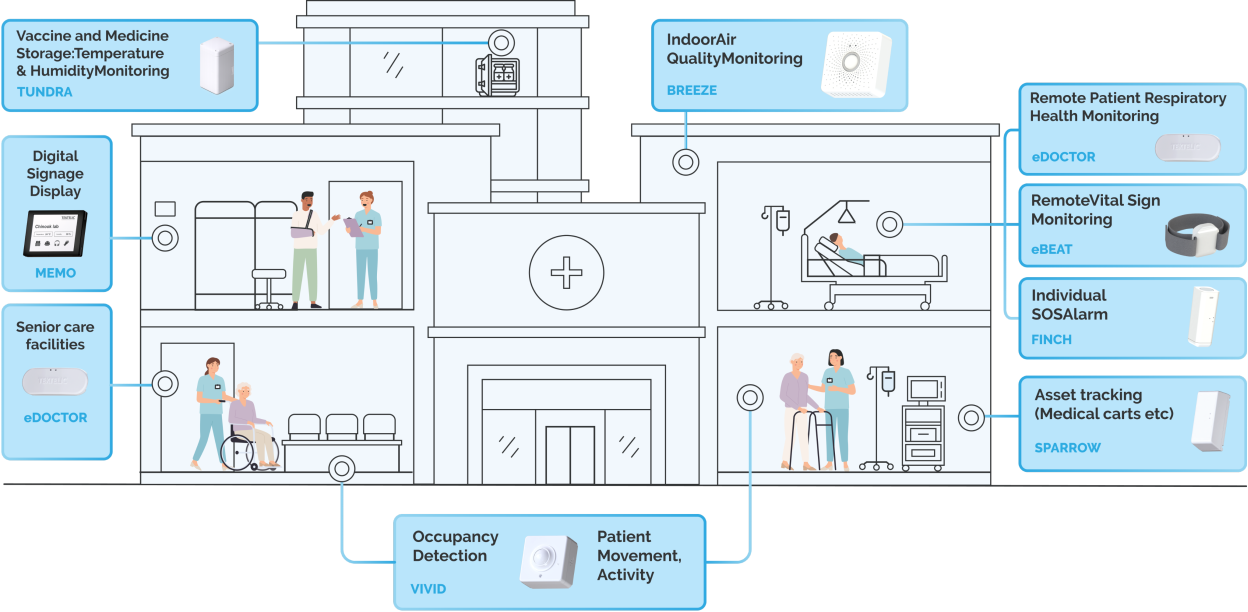
- Medical facilities monitoring: Track the condition of medical equipment and environmental conditions to ensure proper operation and safety.
- Patients' health tracking: Use wearable devices to monitor vital signs and other health metrics, providing real-time data to healthcare providers.
- Hospital management: Improve the management of hospital resources and patient flow with real-time data and automated systems.
- IAQ monitoring: Maintain good air quality in medical facilities to prevent infections and ensure a comfortable environment for patients and staff.
- Asset tracking: Manage medical equipment and supplies to avoid loss and ensure availability when needed.
TEKTELIC's IoT solutions make healthcare smarter and more responsive, empowering both patients and providers with real-time information right on the mobile devices or your computer. By integrating these technologies, healthcare becomes not only more efficient but also more patient-centered, bringing personalized care to the center of medical treatment.
TEKTELIC's Real-World Use Case
In healthcare, eDoctor is one of the key solutions TEKTELIC has deployed, offering hospitals and medical facilities advanced tools to improve patient care.
eDoctor Respiratory Health Monitor provides continuous monitoring of key health indicators, including:
- Body temperature
- Respiration (breathing) rate
- Chest expansion
- Body position
- Heart rate
With eDoctor, healthcare providers can track patient activity levels, stress, physical readiness, heart health, and overall well-being, ensuring timely interventions and improved patient outcomes. Many hospitals are already benefiting from this solution, optimizing both patient care and resource management.

Another project we recently completed with a hospital in Mauritius involved deploying an asset tracking solution aimed at simplifying the work of medical staff. The use of TEKTELIC's SPARROW Asset Tracker enabled hospital staff to quickly locate essential medical equipment, such as wheelchairs, infusion pumps, and ventilators.
This solution brought several key benefits:
- Increased efficiency: Medical workers could find critical equipment faster, reducing delays in patient care.
- Improved inventory management: Real-time tracking helped monitor the availability and location of devices, preventing loss or misuse.
- Cost savings: By optimizing equipment usage, hospitals avoided unnecessary purchases and reduced operational costs.
With these asset trackers, the hospital staff could focus more on patient care rather than spending time locating tools, significantly enhancing overall workflow.

5. Smart Cities Applications
Smart cities are becoming a reality with the help of IoT technology, making urban life more efficient and sustainable. By using IoT in key areas like traffic control, street lighting, and waste management, cities are improving public services and enhancing everyday life.
- Traffic management is one of the key areas where IoT is making a big difference. Sensors monitor traffic in real time, allowing signals to adapt and reduce congestion. This leads to smoother commutes, reduced emissions, and faster travel times for everyone on the road.
- Smart streetlights are another game-changer. These lights automatically adjust brightness based on activity, saving energy and improving safety. Plus, they send alerts when repairs are needed, so streets stay well-lit without wasting resources.
- In waste management, IoT-enabled bins track how full they are, helping to optimize collection routes. This prevents overflowing trash, reduces unnecessary pickups, and keeps cities cleaner.
- Environmental monitoring doesn't stay away from IoT improvements as well, with sensors tracking air quality, noise levels, and other factors in real time. This data helps city planners make better decisions, like where to add green spaces or reduce pollution.
- Public safety benefits, too. IoT-connected cameras and emergency response systems ensure faster reaction times and better coordination during crises, improving security across the city.
- Lastly, public transportation gets smarter with IoT, offering real-time updates for buses and trains, making commutes more reliable and encouraging more people to use public transport, which helps reduce traffic.
- With IoT, cities are becoming smarter, more efficient, and better places to live.
TEKTELIC's Real-World Use Case
TEKTELIC is helping cities become smarter with our advanced LoRaWAN® gateways. These gateways are key to setting up reliable networks that connect various devices and support numerous applications in urban areas.
One of our major projects is working with Everynet to build a nationwide LoRaWAN® network in the USA. Everynet chose TEKTELIC's KONA Mega gateways because they offer excellent performance and reliability. This network will support many smart city functions, such as smart metering and flood management.
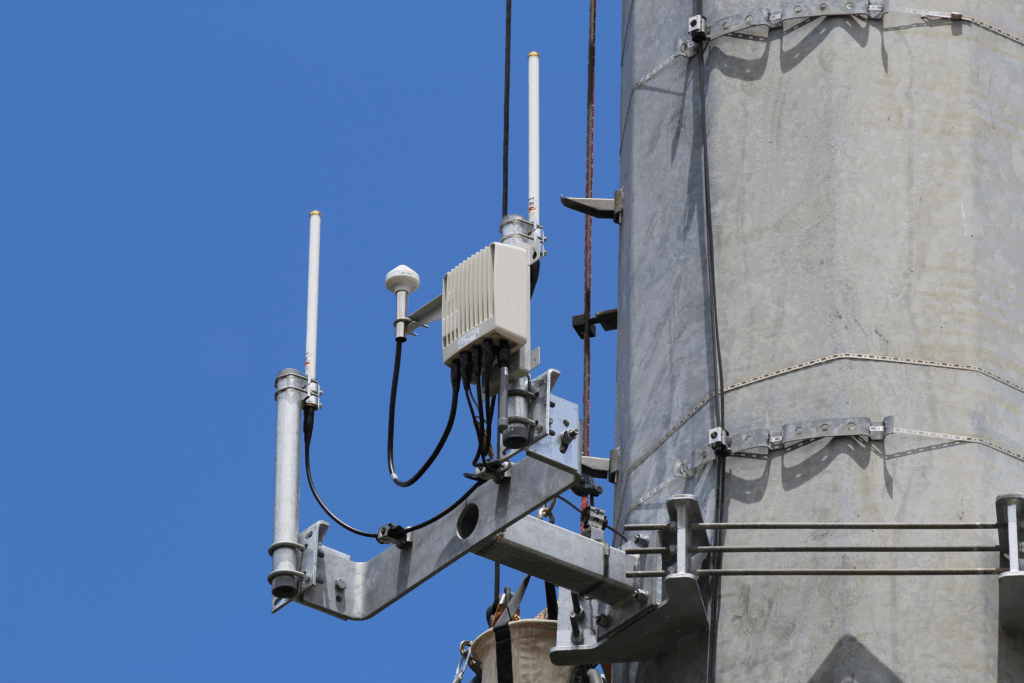
Another example of smart city applications is the deployment in Palermo, Italy, where we partnered with Unidata Spa to revolutionize water management for the city.
By installing over 150 TEKTELIC KONA Macro and KONA Enterprise gateways, Palermo now benefits from improved water usage tracking, better leak detection, and reduced waste. This project showcases how our IoT solutions are driving efficiency and sustainability in urban infrastructure.

6. Smart Agriculture Applications
Smart agriculture is blending traditional farming with connected technology to create a more efficient, sustainable future. Picture fields where soil sensors tell farmers exactly when to water and fertilize, or herds where livestock health is monitored in real time.
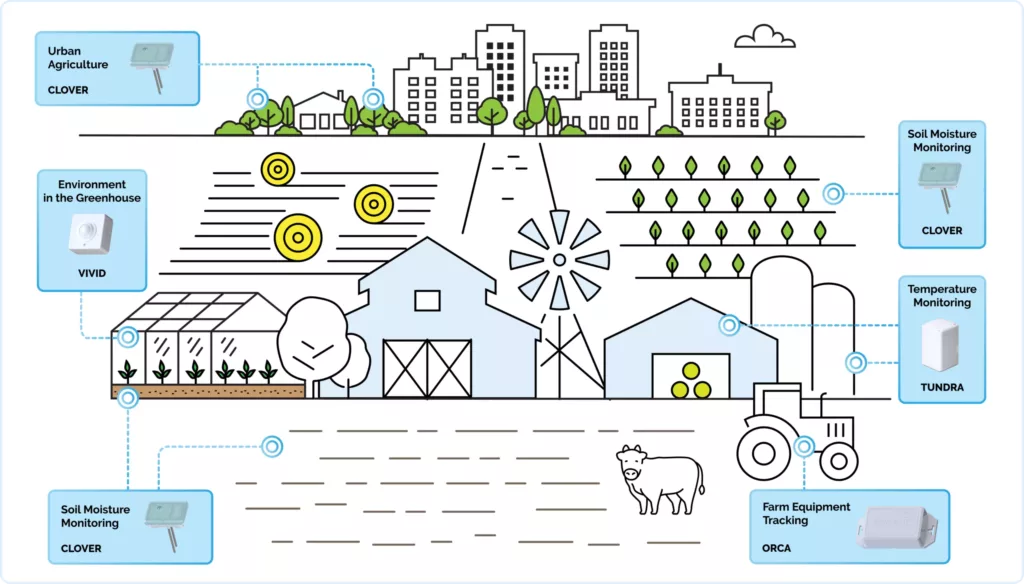
- Precision farming: No more guessing when to water or fertilize. With IoT based products, farmers can track moisture, temperature, and nutrients in the soil, getting real-time data to make precise decisions. This means healthier crops, higher yields, and less waste of valuable resources.
- Smart irrigation: Picture an irrigation system that automatically adjusts based on the weather and soil conditions. Smart irrigation systems do just that, ensuring crops get the right amount of water at the right time, without wasting a drop. It's all about using less to grow more.
- Livestock monitoring: Imagine being able to check the location and health of your animals from your phone. With IoT in agriculture, sensors like GPS collars allow farmers to track livestock movements and health in real time, receiving alerts if an animal shows signs of illness or strays too far. It's like having eyes on the farm 24/7.
- Automated machinery: Long hours in the field are being replaced by automated tractors and drones that handle planting, spraying, and harvesting with precision. These machines reduce labor and increase efficiency, getting the job done faster and more reliably.
- Data-driven decisions: It's not just about intuition anymore—farming is going digital. By analyzing data from sensors, weather forecasts, and market trends, farmers can make smarter decisions about when to plant, irrigate, and harvest. This helps them maximize profits and minimize waste.
Smart agriculture is bringing farming into a new era. It's about working smarter, not harder, using technology to ensure every drop of water, every seed, and every hour of labor counts toward a bigger, better harvest.
TEKTELIC's Real-World Use Case
We're excited to share the successful deployment of TEKTELIC's smart agriculture sensors with Cerasus, an agricultural company in Portugal. Faced with challenges such as climate change and water scarcity, Cerasus chose our LoRaWAN® technology to enhance their water management practices.
By deploying our CLOVER and KIWI sensors along with the KONA Micro Lite gateway, Cerasus achieved:
- Precise irrigation: Accurate monitoring and control of irrigation systems.
- Optimized water use: Efficient water management to reduce waste.
- SPRING certification: Recognition for responsible water management practices.
This project showcases how TEKTELIC's technology supports sustainable farming and addresses critical environmental challenges.
Alexandra Pinto, the agricultural technician, emphasized the significance of TEKTELIC tools, stating, "Choosing TEKTELIC was a strategic decision grounded in their 15 years of delivering top-tier LoRaWAN® products. Their extensive expertise perfectly aligns with our needs; their solutions not only boast robustness but also provide the confidence of swift and hassle-free deployment."

7. Energy Management & Smart Metering Applications
With energy costs rising, both businesses and households are looking for smarter ways to save. This is where IoT and smart metering step in. Smart meters offer real-time data on energy use, allowing users to monitor and adjust their consumption more efficiently. By identifying where energy is being wasted, users can cut costs and reduce their environmental impact. It's a simple, effective solution that gives people more control over their energy use while helping businesses meet sustainability goals.
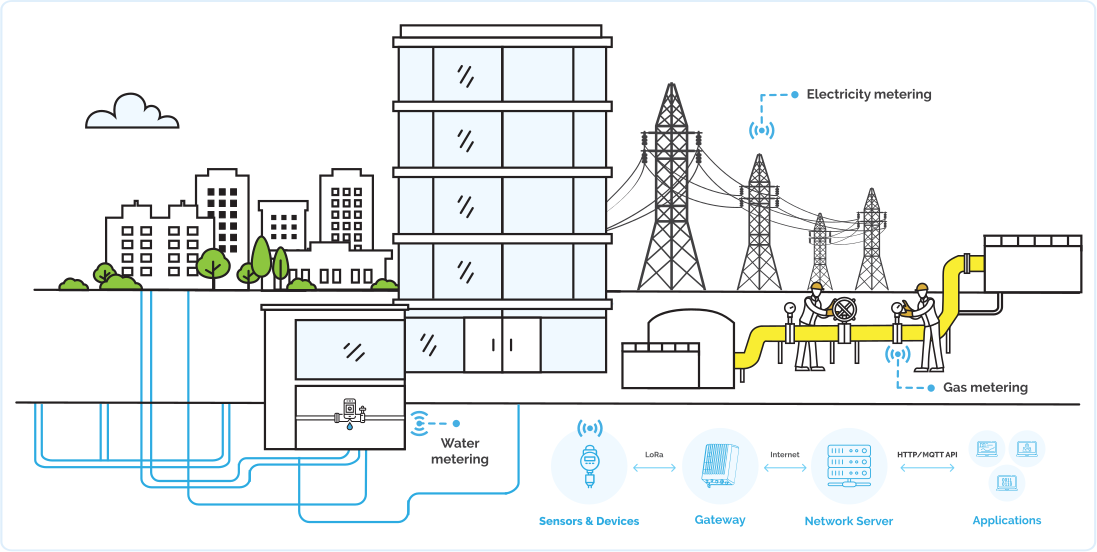
- Smart metering: These IoT based products monitor electricity, gas, or water usage in real time. Consumers can track their energy consumption through apps, giving them better control over how and when they use energy. This visibility helps reduce waste and improve efficiency.
- Optimizing energy use: With IoT sensors tracking usage patterns, businesses can automate lighting, HVAC, and other systems to run only when needed. This significantly cuts down on unnecessary energy use, leading to lower bills and a smaller environmental footprint.
- Demand response: In larger-scale applications, smart meters can communicate with energy providers to balance supply and demand. During peak hours, energy usage can be adjusted to reduce stress on the grid, further saving costs.
- Proactive maintenance: IoT sensors also enable early detection of equipment issues that lead to energy inefficiency. By identifying problems early, repairs can be made before they escalate, ensuring systems run at optimal levels.
Smart metering and IoT-powered energy management systems are essential in today's world, helping consumers and businesses optimize energy consumption, reduce costs, and support sustainability initiatives.
TEKTELIC's Real-World Use Case
With 15 years of expertise, TEKTELIC has become a trusted leader in smart metering, successfully helping businesses manage energy more efficiently. By providing real-time data on energy consumption, TEKTELIC's solutions enable users to reduce costs and optimize their energy use. Whether it's helping a small business cut expenses or improving sustainability in large-scale operations, TEKTELIC's smart metering solutions offer clear, actionable insights.
TEKTELIC and Drei Austria's partnership introduced a unique and impactful IoT solution by expanding LoRaWAN® connectivity across Austria. The challenge was creating a network to support real-time data collection for smarter city operations, including lighting, parking, and waste management.
Drei Austria needed a flexible IoT infrastructure to enable real-time data collection for businesses and public services, improving efficiency and innovation.
TEKTELIC deployed its KONA Gateways, offering strong, nationwide IoT coverage, supporting everything from smart lighting to logistics management.
"With our nationwide LoRaWAN network, we will be the only full-service provider to offer domestic companies the full potential for IoT connectivity and IoT solutions from a single source, in addition to the country's first 5G standalone network" says Matthias Baldermann, CTO of Drei. "With TEKTELIC we have selected a leading LoRaWAN Gateway supplier, and we are looking forward to a good cooperation during the rollout and operation of our network."
The partnership created an IoT ecosystem that enhanced operational efficiency across key sectors, driving smarter operations throughout Austria.
With TEKTELIC's network, the city now operates more efficiently, making smarter decisions to benefit residents and the environment.

8. Logistics and Fleet Management Applications
IoT in logistics and fleet management is transforming supply chain management by providing smarter, faster ways to track and manage vehicles and assets. With real-time GPS tracking, businesses can monitor their fleet's location, optimize routes, and reduce fuel costs. Imagine knowing exactly where your trucks are and how they're performing at any moment!

Here's how IoT is reshaping the sector:
- Real-time tracking: GPS fleet tracking systems allow businesses to monitor connected vehicles locations, driving behaviors, and routes in real time. This ensures more efficient routing, reducing fuel consumption and delivery times.
- Asset monitoring: IoT sensors can track the condition of goods in transit, such as temperature and humidity, which is critical for perishable items. This ensures product quality and helps avoid losses.
- Predictive maintenance: IoT devices monitor vehicle health, identifying potential issues before they result in breakdowns. This minimizes downtime and extends the lifespan of fleet assets.
- Safety and compliance: Fleet managers can use IoT data to monitor driver behaviors such as speeding or harsh braking, promoting safer driving practices. Additionally, automated reports help ensure compliance with safety regulations and reduce paperwork.
- Fuel efficiency: By optimizing routes and monitoring vehicle health, IoT solutions help reduce fuel consumption, leading to cost savings and lower emissions.
TEKTELIC's advanced IoT and GPS fleet tracking solutions provide businesses with the tools they need to optimize logistics operations, ensuring faster deliveries, better asset management, and improved safety across the board.

TEKTELIC's Real-World Use Case
In the bustling waters of the Adriatic Sea, ensuring safe navigation is critical. That's why TEKTELIC ORCA Asset Trackers were selected to monitor the movement and positioning of sea buoys in real time. With a user-friendly web application, these buoys can be tracked 24/7, delivering precise location data and condition updates.
This smart tracking solution is transforming maritime safety. It's not just about knowing where buoys are – it's about optimizing shipping routes, speeding up emergency response, and significantly reducing the risk of accidents. With ORCA trackers in place, both marine life and valuable assets are protected, creating a safer and more efficient ocean environment.

Do you know which asset tracking companies are proven by experts? We made a comprehensive guide to save your time. Explore the article"6 Types Of Asset Tracking Technologies And Which One Is The Best For Your Business"
9. Manufacturing & Industrial Applications
IoT in Manufacturing is fundamentally changing how factories operate, bringing real benefits in terms of efficiency, safety, and productivity. By integrating smart devices and the Industrial Internet, you can monitor equipment performance, optimize production processes, and prevent costly breakdowns before they happen. Not only does this boost efficiency, but it also helps create a safer work environment for your team.
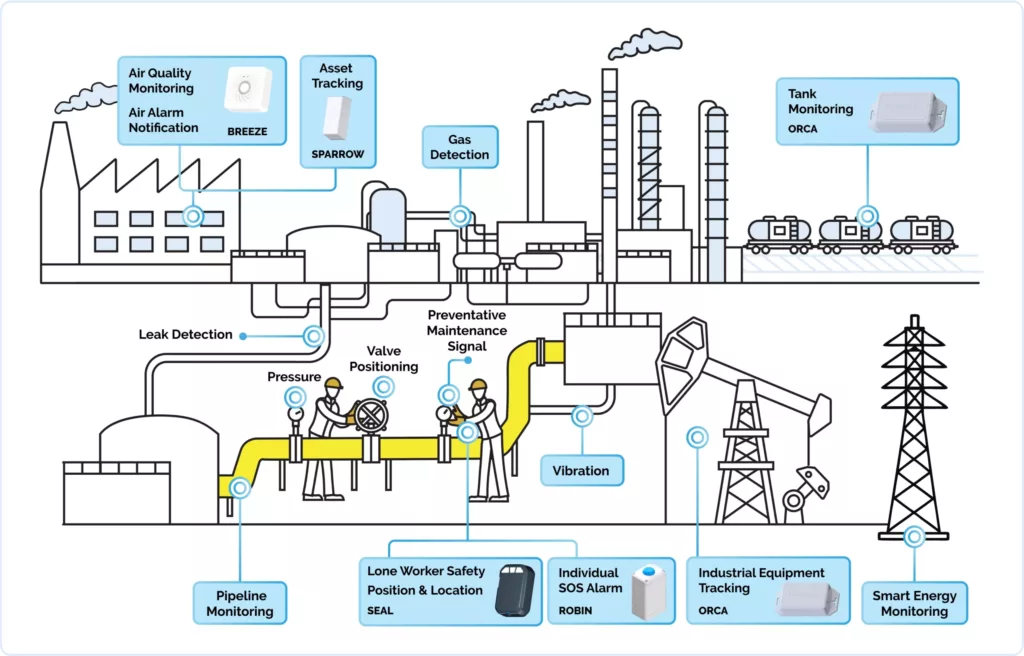
- Preventing breakdowns before they happen: IoT sensors continuously monitor the health of machines, detecting early signs of issues like overheating or unusual vibrations. This allows maintenance teams to address problems before they lead to breakdowns, minimizing downtime and saving money on emergency repairs.
- Maintaining optimal conditions: In the manufacturing sector, keeping the right environmental conditions is crucial for both product quality and equipment longevity. IoT sensors monitor temperature, humidity, and air quality in real time, ensuring everything stays within safe and efficient ranges. If something is off, quick alerts allow for immediate corrections and resource usage, protecting both machinery and products.
- Full visibility of assets: IoT technology allows manufacturers to track the location and condition of equipment, raw materials, and finished products throughout the entire production process. This visibility reduces delays, prevents losses, and ensures efficient use of resources from start to finish.
- Enhancing worker safety: IoT devices and sensors play a key role in improving safety on the factory floor. Sensors detect potentially hazardous conditions, such as gas leaks or extreme temperatures, and trigger immediate alerts. Wearable devices can also monitor the health and location of workers, ensuring that help is dispatched quickly when needed.
- Boosting operational efficiency: With IoT systems collecting data at every stage of the production process, manufacturers can identify inefficiencies and make real-time adjustments. This results in faster production cycles, less waste, and more effective use of resources, helping factories run more smoothly.
- Reducing energy costs: Energy consumption is a major cost in manufacturing, and IoT helps to optimize it. By tracking energy use in real time, manufacturers can pinpoint areas of waste and take action to reduce energy consumption, lowering costs while also supporting sustainability goals.
With IoT technology, manufacturers are gaining greater control over their operations, leading to fewer disruptions, improved safety, and significant cost savings. This trusted, data-driven approach is helping businesses stay ahead in a competitive industrial landscape.

TEKTELIC's Real-World Use Case
IMI, a leader in Industrial IoT for the oil and gas sector, faced the challenge of automating data collection across vast, risky environments. Here's how TEKTELIC's KONA Macro Gateways provided a powerful solution:
- Continuous monitoring: Enabled real-time, automated data collection across large areas, eliminating the need for risky manual checks.
- Cost efficiency: Reduced installation and operational costs by 30-50% with fewer gateways needed.
- Rugged design: With ESD, lightning protection, and resilience against harsh conditions, the gateways were perfect for the demanding oil and gas environments.
- Seamless connectivity: Ensured reliable data transmission, vital for smooth, efficient operations.
TEKTELIC's solution transformed IMI's operations by boosting efficiency and cutting costs.

Key benefits of implementing IoT applications
IoT is transforming various industries, making our lives more convenient, efficient, and sustainable. From smart homes and healthcare to agriculture and smart cities, IoT applications are making waves and reshaping the world as we know it.
Implementing applications in IoT for smart cities brings exciting benefits that can completely transform the way businesses operate:
- Boost efficiency: IoT automates routine tasks and optimizes resource use, enabling faster operations with less waste.
- Real-time control: IoT gives businesses instant access to valuable big data, helping them solve problems as they happen.
- Cut costs: Predictive maintenance and smarter energy use keep expenses low.
- Greater security: IoT can improve visibility into connected assets, equipment, and environmental conditions.
- Personalized experiences: For customers, IoT offers tailored services that make interactions smoother and more engaging.
These benefits help businesses stay competitive while enhancing productivity, safety, and sustainability.